 Skip to main content Skip to footer
Yoga Nidra & Meditation Teacher Training in Goa
Yoga Nidra & Meditation Teacher Training in Goa — Learn to Guide It Authentically.
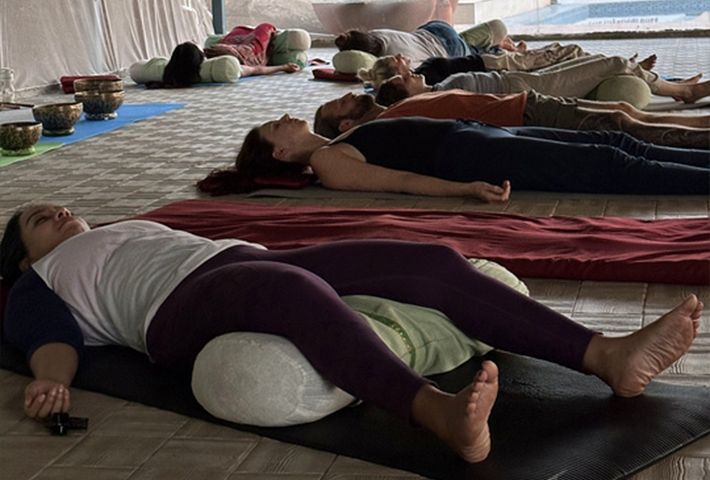

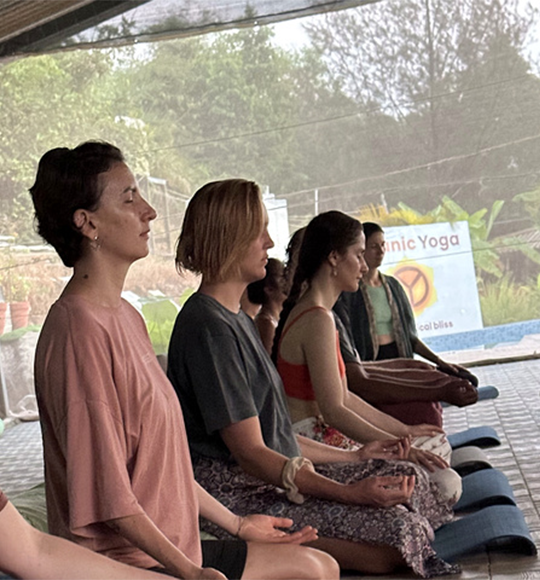

A Different Reason for Each Person
You don’t have to arrive
with the same intention.


One programme.
Several meaningful reasons to join.
The Future Facilitator
The Practitioner Going Deeper
The Self-Enquirer
The Continuing Student
The Progression
Experience it. Understand it.
Then learn to guide it.
01 · Experience
02 · Understand
03 · Facilitate
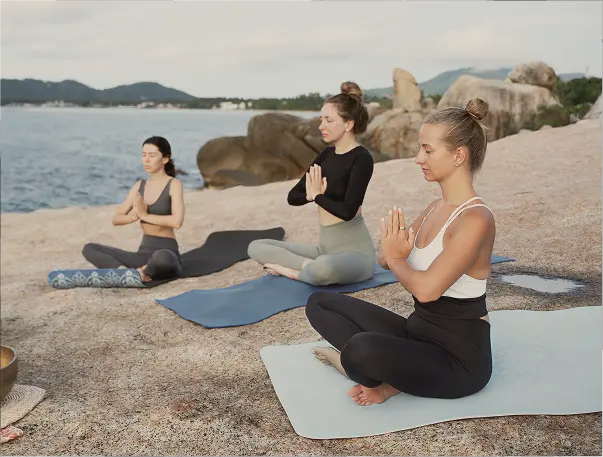
Yoga Nidra
Rest at the edge
of waking and sleep.
Meditation Beyond One Method
A spectrum of meditation.
Not a fixed collection of techniques.
Attention & Concentration
Movement & Active Practice
Observation & Witnessing
Stillness & Receptivity
Yoga Nidra
Facilitation
Tradition · Experience · Science
Not everything meaningful
needs to be made into the same kind of truth.
Learning to Guide
From receiving a meditation
to holding the space for one.
Voice & Presence
Words Matter
Practise Conducting


Daily Rhythm
Enough structure to go deeper.
Enough space to let it settle.
Begin through direct experience.
Nourish and pause.
Understand what you are practising.
Integration is part of the rhythm.
Move inward.
A short reset.
Close through practice.
Community and rest.
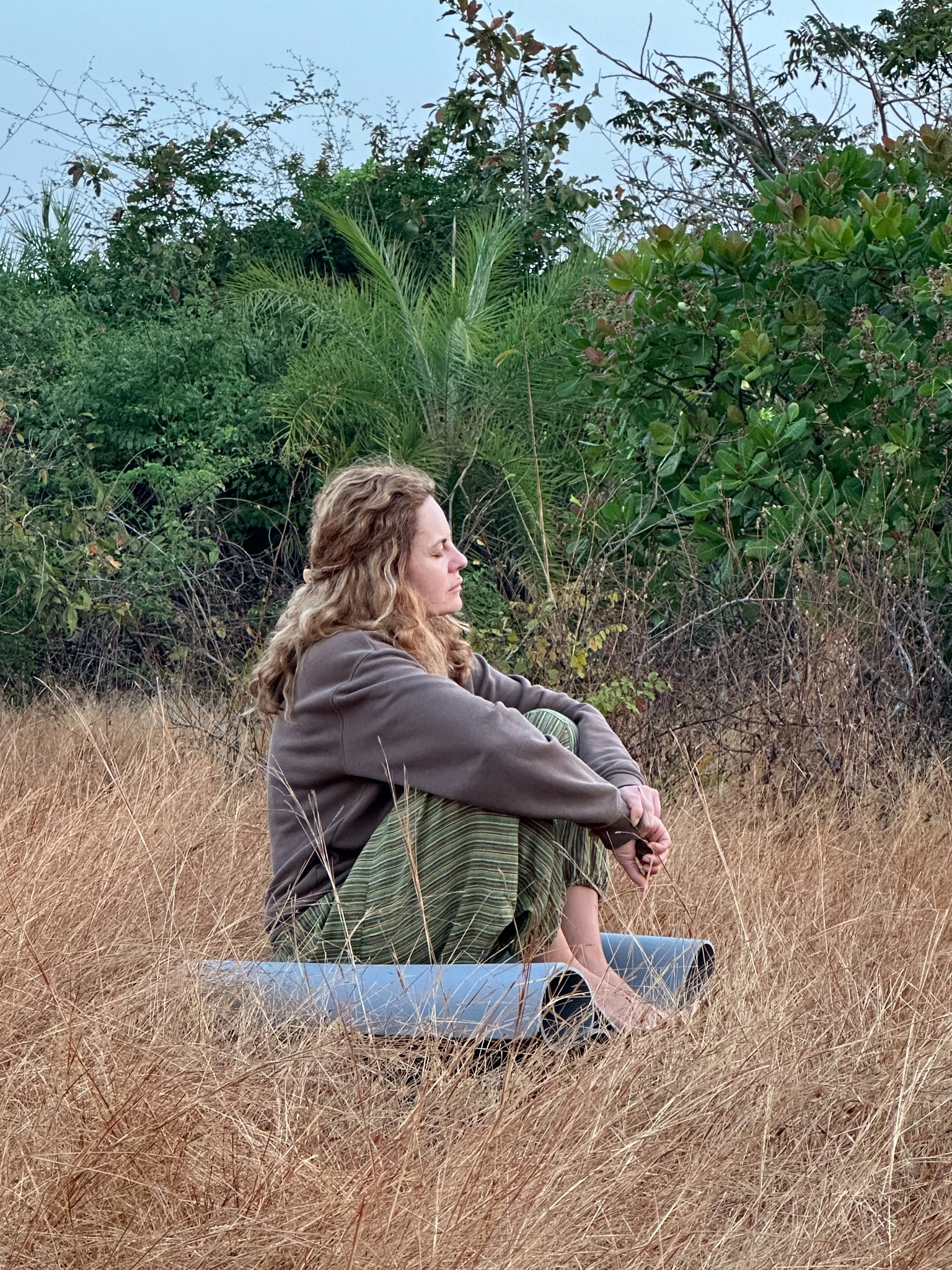
The Inner Journey
Sometimes meditation begins where explanation becomes quiet.

My work isn’t to be in every room. It’s to make sure what happens in every room is worth your time.
Swami Anand Jiska, Torchbearer
Teacher’s Panel
The people behind the training.
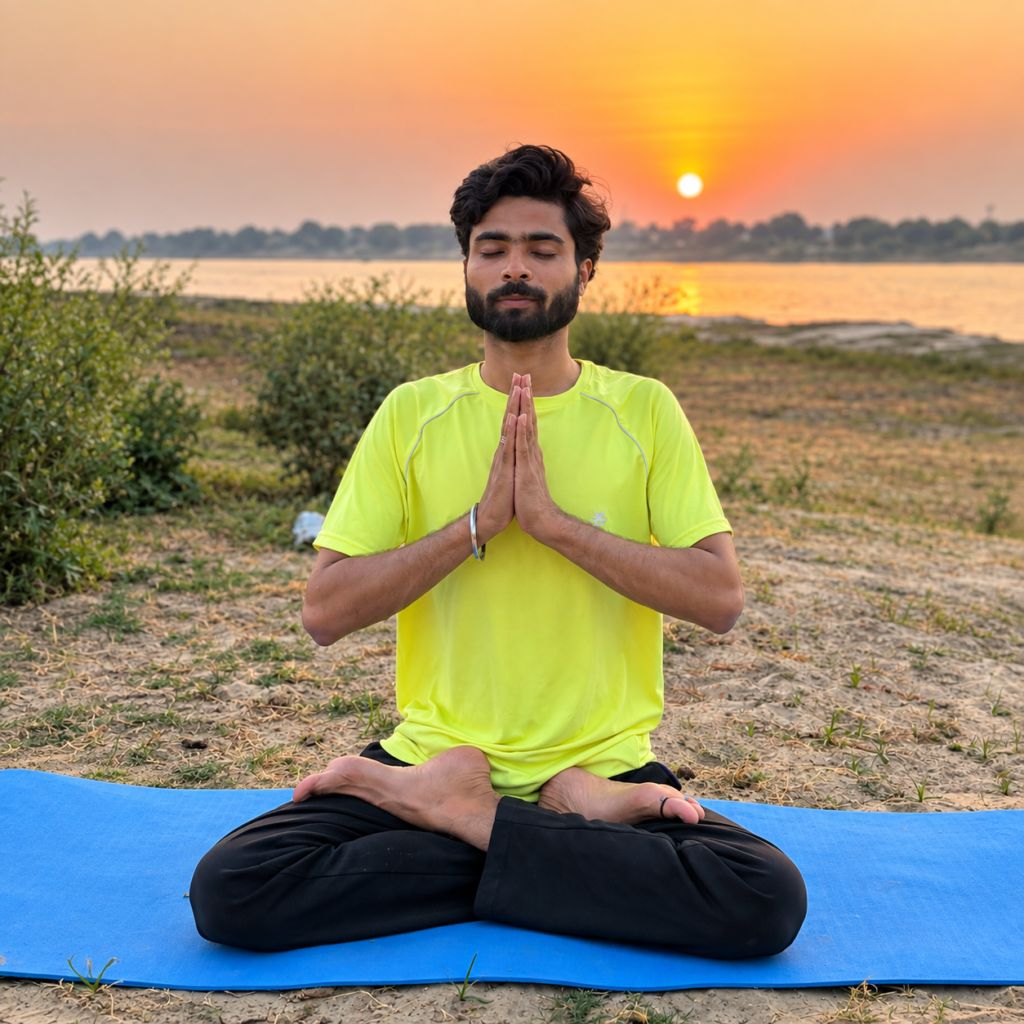
Madhup Srivastava
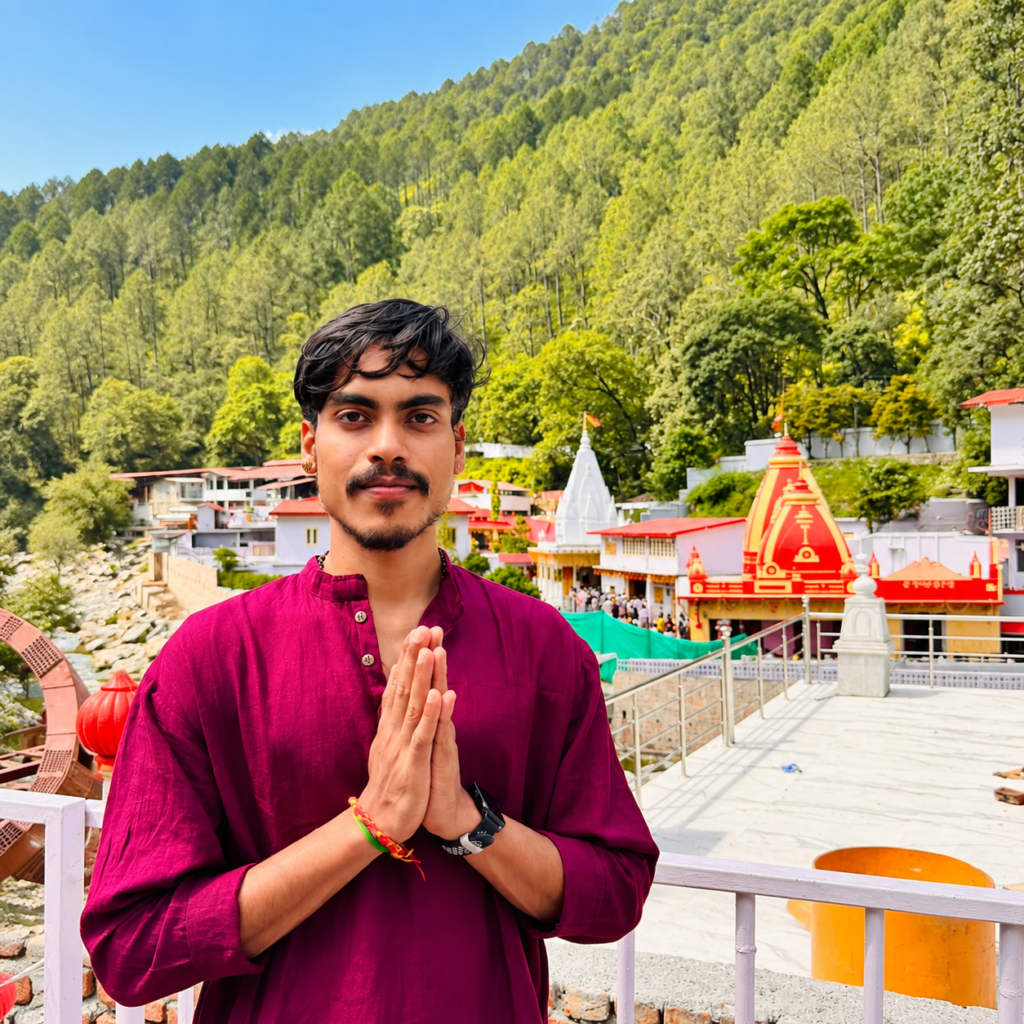
Amarjeet Ranjan
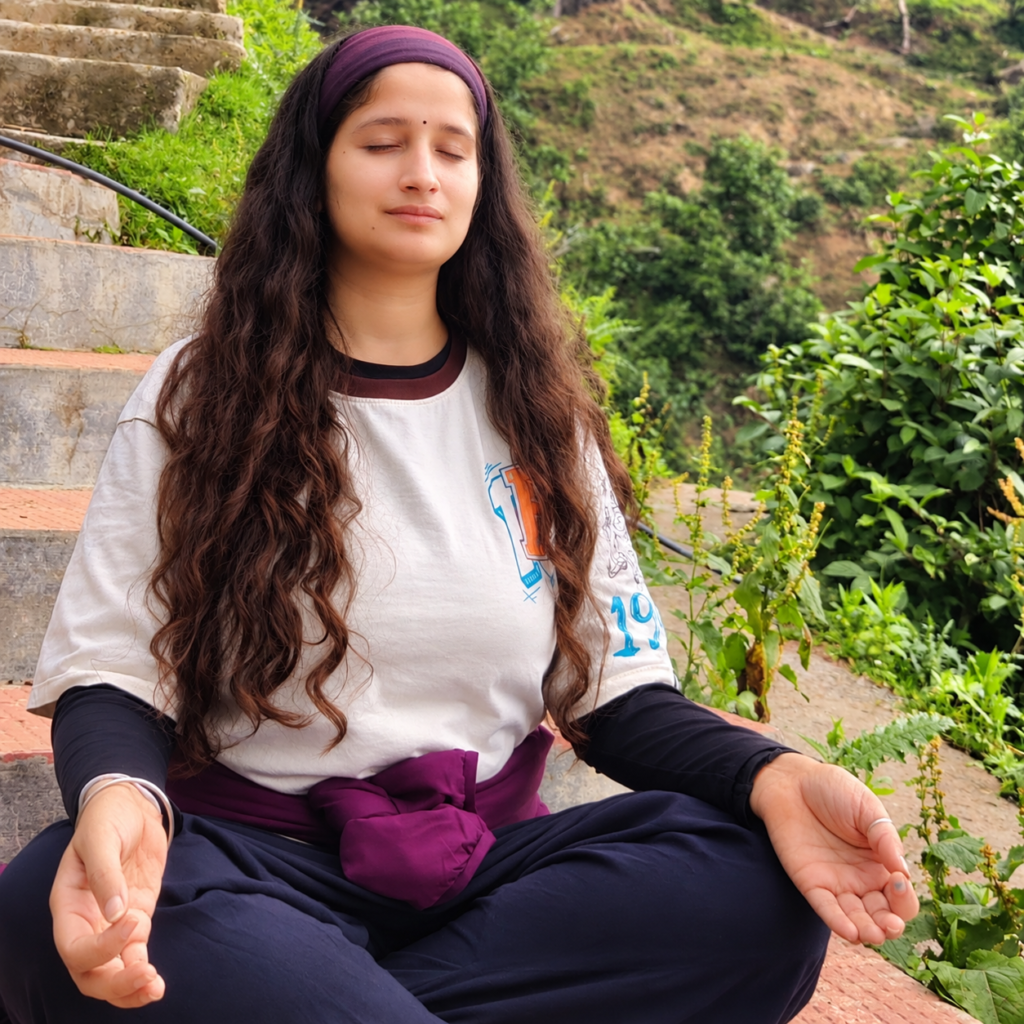
Gauri Mehra
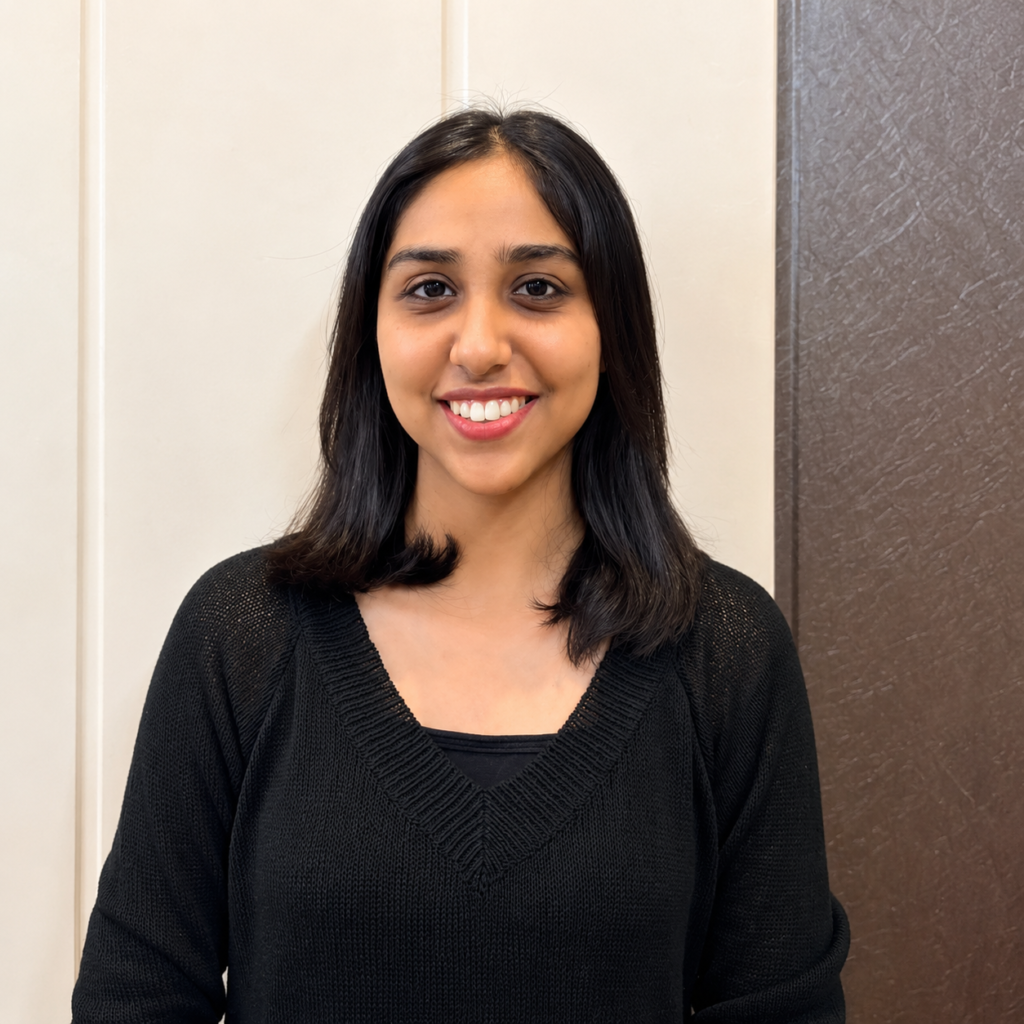
Angel Kaushik
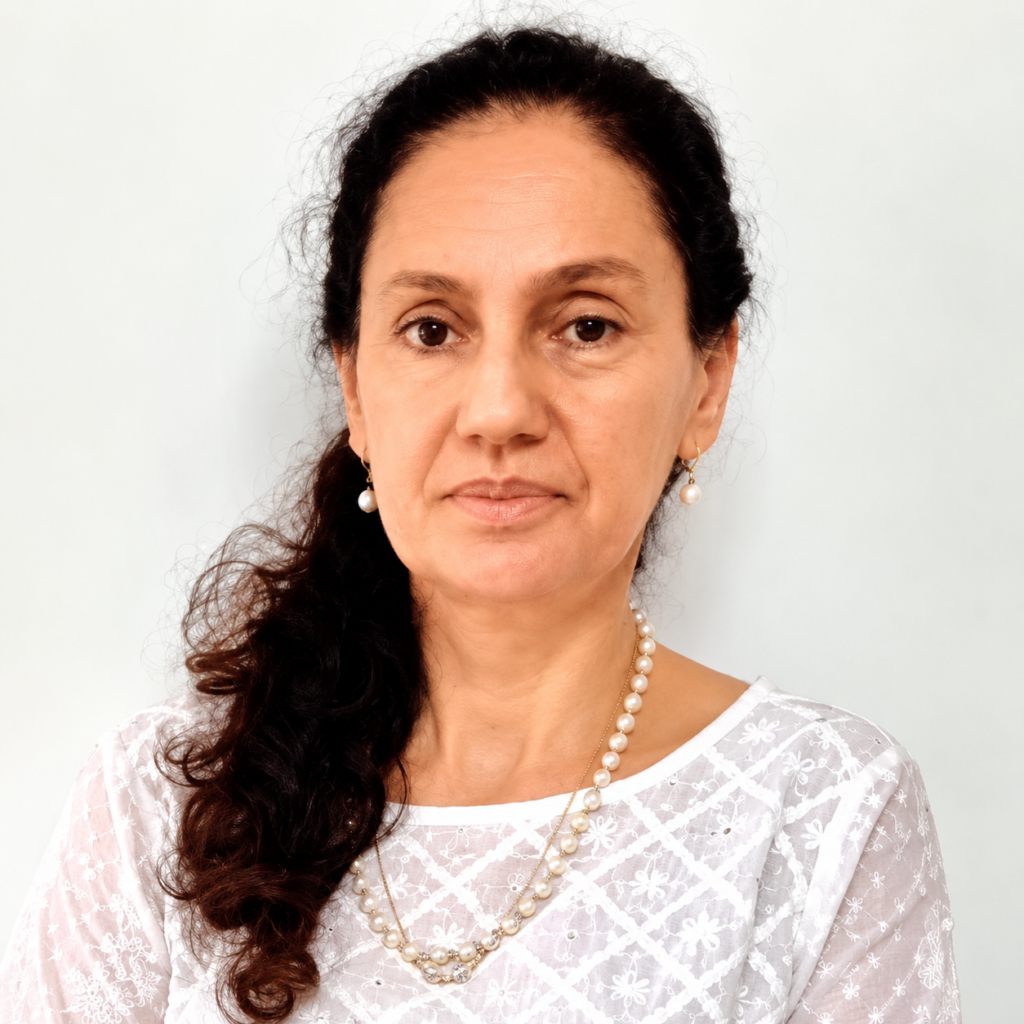
Ma Prem Kalu
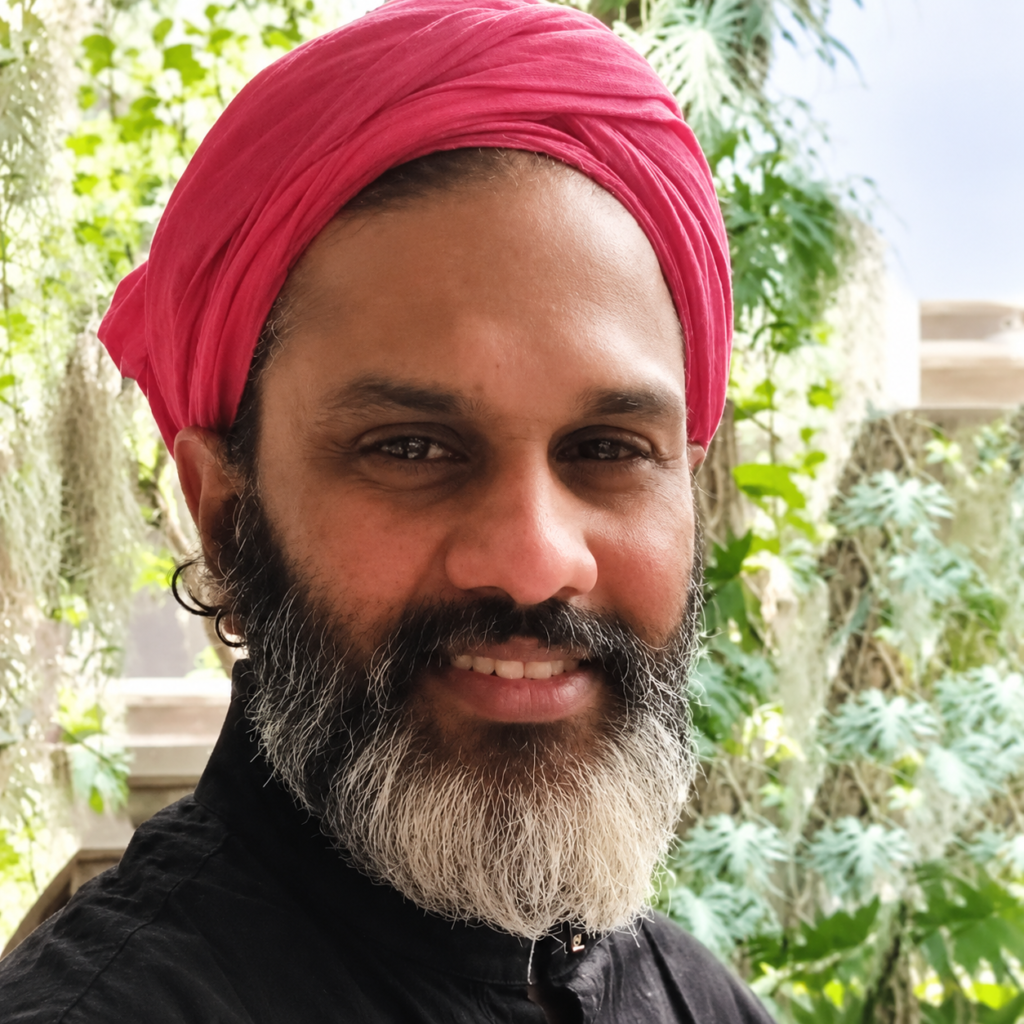
Naren JI
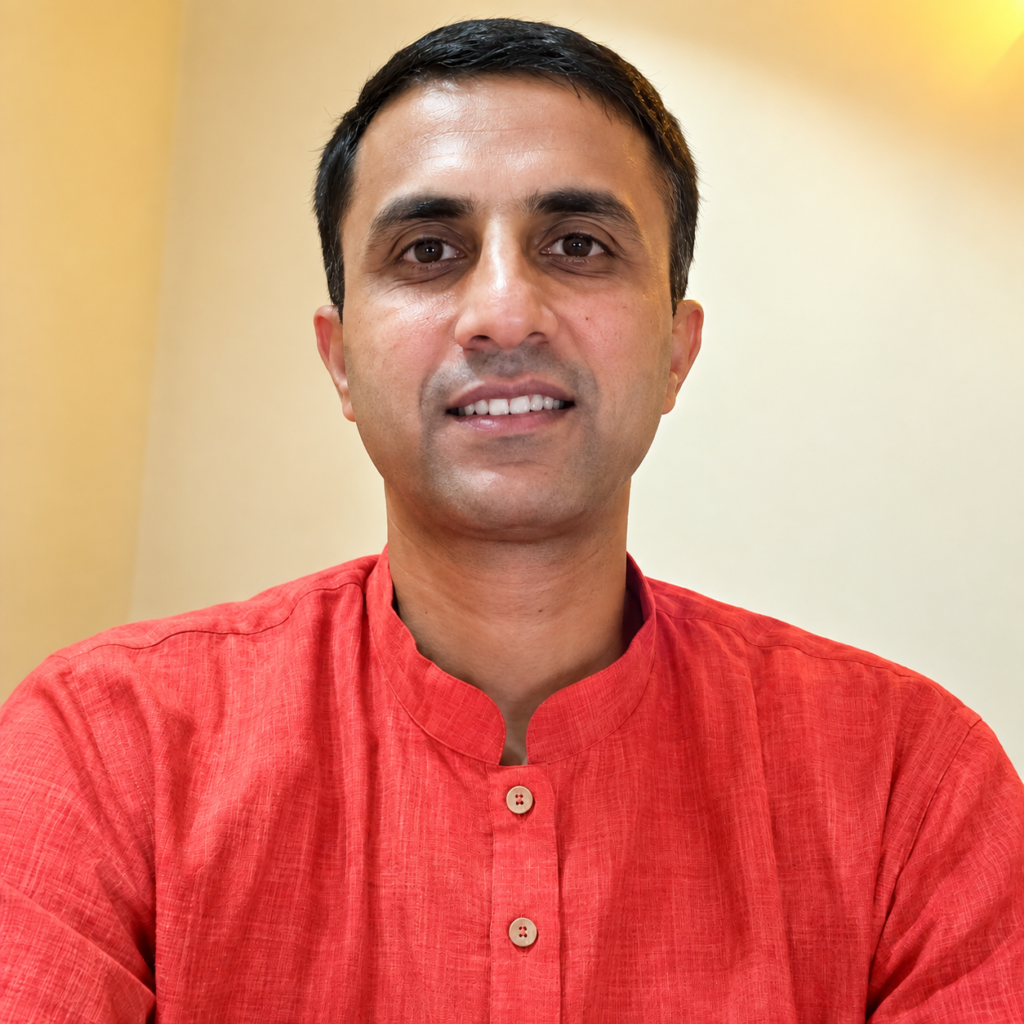
Girish JI
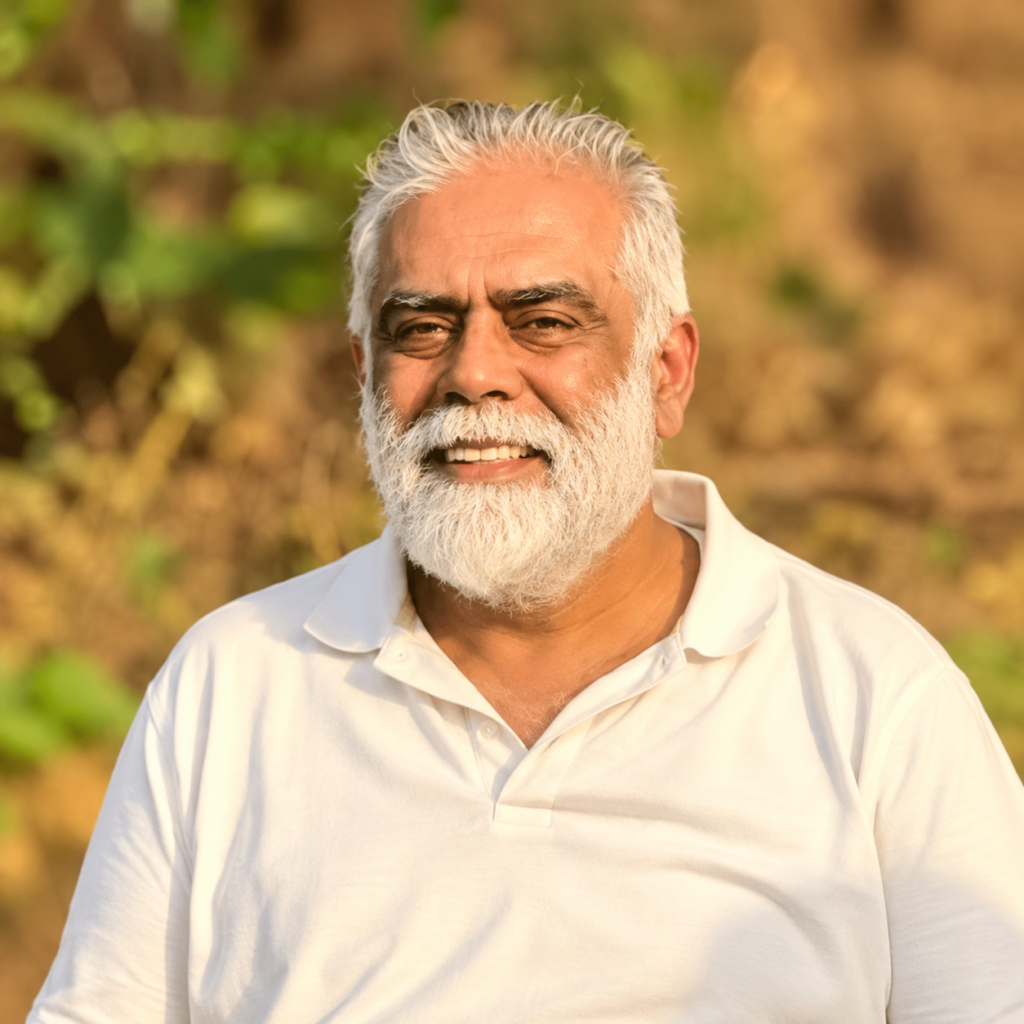
Swami Krishna Saraswati
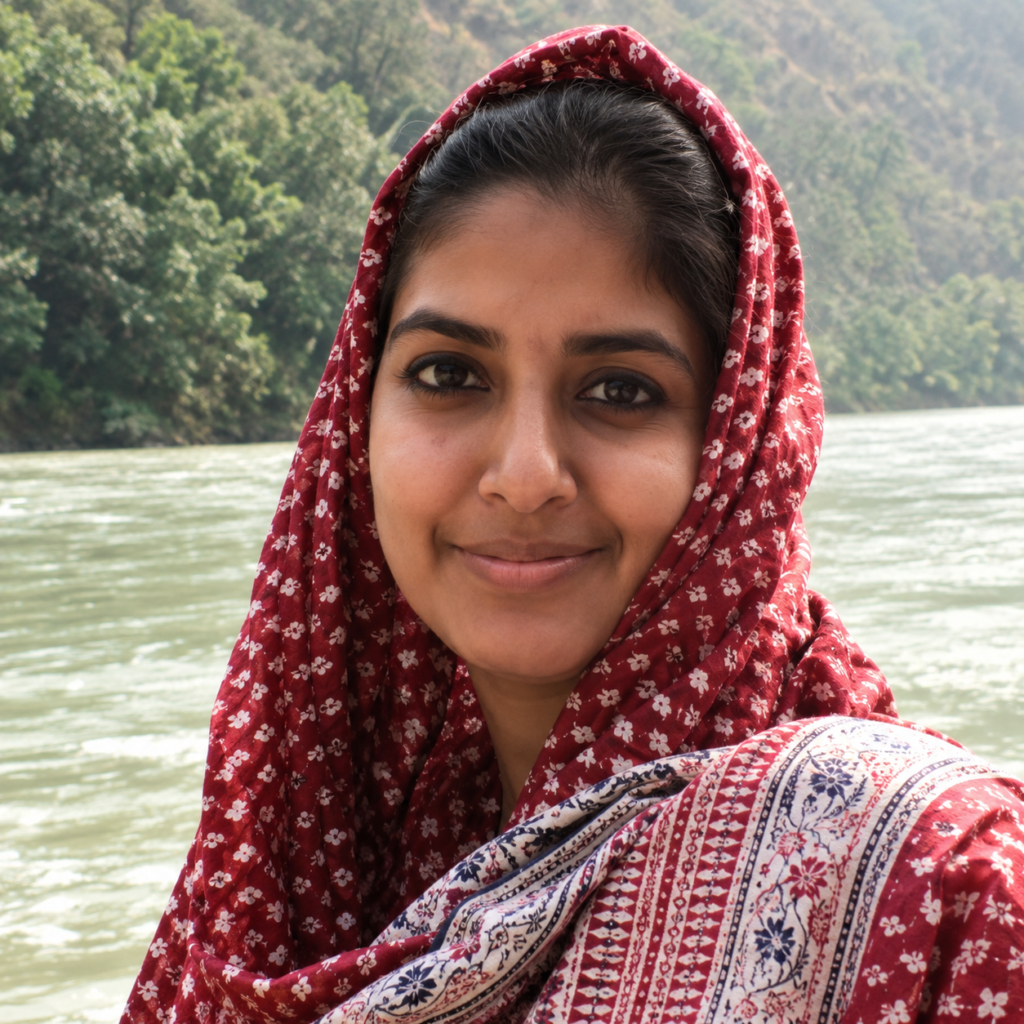
Varsha Ji
A contemplative training needs
the right kind of environment.
Guided by Practitioners
Residential Continuity
Morjim · North Goa
Student Voices
What the experience
felt like from inside.

Dates & Investment
Eleven days in Goa.
Twin Share
Triple Share
Private Room
Planning Your Journey
Take care of the practical details.
Then arrive ready to practise.
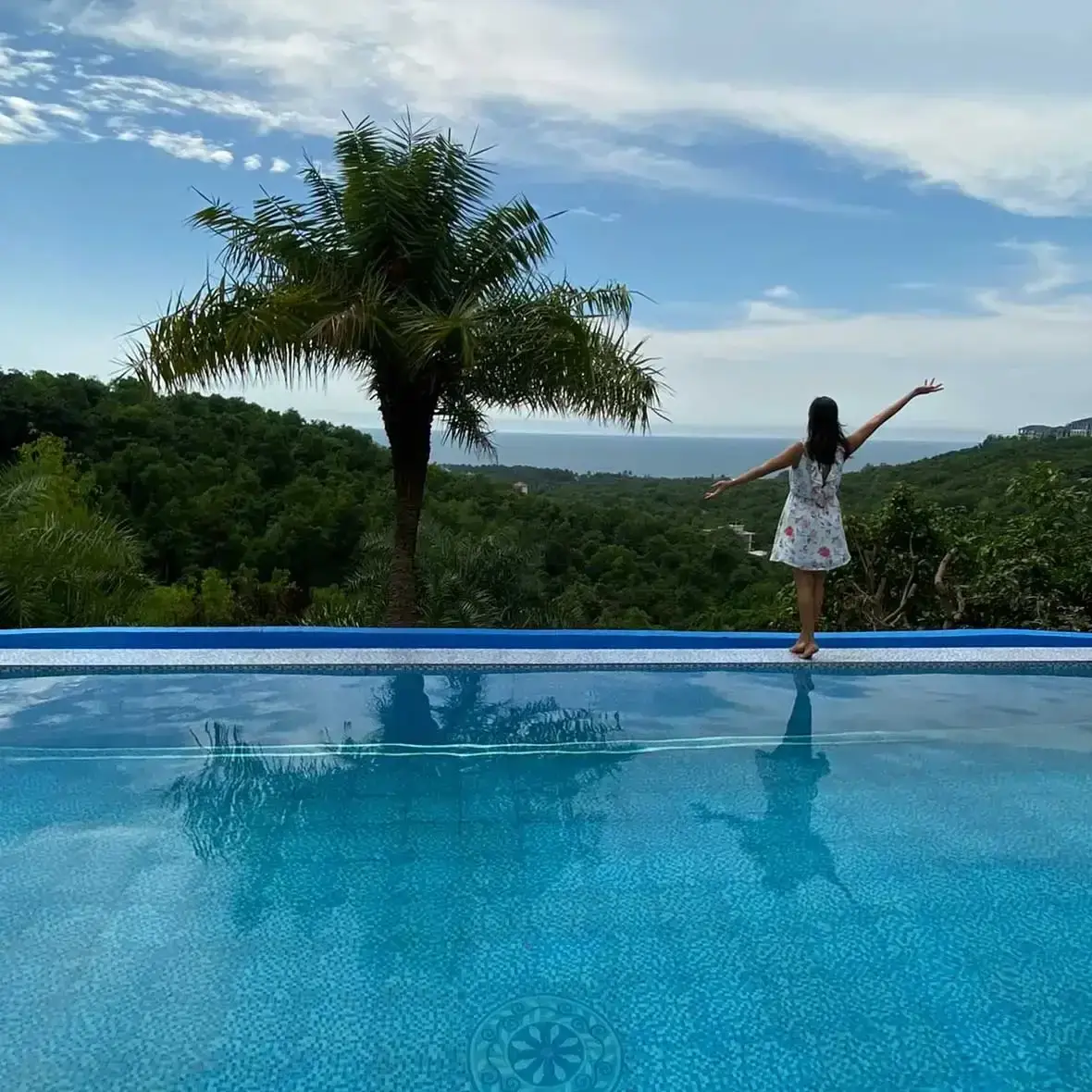
Live where you practise.



Simple, steady nourishment.
Two Goa airports.

Frequently Asked Questions
Questions worth asking before you choose.
What is the Yoga Nidra & Meditation Teacher Training?
An 11-day residential programme in Goa that combines personal practice, Yoga Nidra, multiple active and passive meditation approaches, study and facilitation training. It is designed both for people who want to deepen their own meditative journey and for those who want to guide meditation for others.
Who is this training designed for?
The programme welcomes complete beginners, dedicated practitioners, yoga teachers, wellness professionals, coaches, therapists and people simply drawn to meditation or self-enquiry. No previous meditation-teaching experience is required.
Do I need previous experience?
No. You can begin with genuine interest and willingness to practise. More experienced meditators and teachers are also given room to deepen their understanding and facilitation skills.
Why combine Yoga Nidra and Meditation?
They offer different doorways into awareness. Yoga Nidra develops guided inward attention and deep rest, while active and passive meditation approaches let you explore movement, stillness, observation and different qualities of attention. Together they create a broader experiential and teaching foundation.
What makes Oceanic Yoga’s approach different?
Rather than centring the training on a single meditation method, Oceanic combines Yoga Nidra with multiple active and passive approaches, their underlying concepts, repeated personal practice and the practical skills needed to guide others.
How long is the training?
The current Oceanic programme is 11 days and 10 nights in Goa. The exact daily sequence can vary according to the batch and faculty.
Is this only meditation, or do we also practise yoga?
Both. Every morning opens with a full yoga class before the meditation and Yoga Nidra work begins. The training centres on meditation and facilitation, but the body stays part of daily practice throughout the eleven days — it is not eleven days of sitting alone.
Can I join mainly for my own meditation and self-enquiry?
Yes. Not everyone comes to become a teacher. Some participants want sustained time for meditation, reflection and self-enquiry; others are exploring questions around awareness, direction, meaning or a deeper relationship with themselves.
Will this training benefit my personal life?
Many people use meditation to cultivate greater awareness, steadiness, reflection and a more conscious relationship with everyday life. What you experience is individual, so the programme creates conditions for practice and enquiry rather than promising a particular personal outcome.
Is this a healing programme?
Some participants experience meditation and Yoga Nidra as restorative, emotionally meaningful or supportive within a wider personal healing journey. Experiences vary. The training is centred on contemplative practice, education and facilitation rather than promising treatment or a specific therapeutic result.
Does the course explore spiritual dimensions of meditation?
Yes. Yogic and contemplative perspectives on awareness, consciousness, Sankalpa, witnessing and deeper meditative states can be explored as part of the tradition and lived practice. These are presented as contemplative frameworks rather than as medical or scientific claims.
What if I am simply curious about meditation?
That is a valid reason to come. You do not need a professional goal, advanced practice or particular belief system. Curiosity, openness and willingness to experience the practices are enough to begin.
What is Yoga Nidra?
Yoga Nidra is a guided contemplative practice commonly associated with deep relaxation while maintaining a thread of awareness. Within yogic traditions it is also explored as a practice of inward attention, witnessing and self-enquiry.
What will I learn during the training?
The programme includes Yoga Nidra, multiple active and passive meditation techniques, the concepts behind the practices, guided relaxation, teaching methodology, communication and vocal guidance, session structure and practice conducting meditations for others.
How many meditation techniques will I experience?
You will experience and study a minimum of eight meditation techniques, including both active and passive approaches. The exact selection can vary between groups, allowing the faculty to respond to the people in front of them while maintaining the programme’s core learning outcomes.
Will I learn both active and passive meditation?
Yes. Every training includes both active and passive approaches. This gives you experience of different pathways into meditation and helps you understand why one method may resonate differently from another.
Is sound healing included?
The current programme includes opportunities to receive sound-healing sessions alongside the Yoga Nidra and meditation training.
How are yogic tradition and modern research brought together?
Traditional contemplative ideas are taught within their yogic context, while measurable health or psychological claims are treated separately and carefully. This allows the course to respect both lived spiritual enquiry and contemporary evidence without forcing one to imitate the other.
What does research say about meditation and Yoga Nidra?
Meditation has been studied for areas such as stress, anxiety and sleep, with encouraging findings alongside important differences in study quality and individual response. Research into Yoga Nidra is also developing. The programme therefore treats research as useful context rather than as a promise of guaranteed results.
Does every batch follow exactly the same meditation techniques?
The foundations and learning outcomes remain consistent, but the exact selection of practices can change. This responsiveness is intentional: every group experiences both active and passive approaches and a minimum of eight techniques, while faculty can adapt the experiential journey to the people present.
Will I be trained to conduct meditation sessions?
Yes. Facilitation is a central outcome. You experience the practices, study their structure and context, and practise conducting them so that your ability to guide develops from direct experience rather than memorised scripts alone.
Will I learn to guide Yoga Nidra?
Yes. You learn through receiving and practising Yoga Nidra and by developing the sequencing, language, voice, pacing and communication needed to guide the practice for others.
What teaching skills are included?
Facilitation includes preparing the environment, structuring a session, voice and communication, appropriate wording, pacing and silence, working with individuals and groups, and repeated practice conducting meditation and Yoga Nidra.
Can I teach Yoga Nidra and Meditation after completing the programme?
The programme is designed to prepare you to begin facilitating Yoga Nidra and meditation sessions with greater confidence and understanding. As with any contemplative discipline, your depth as a facilitator continues to develop through ongoing personal practice and teaching experience.
Can I integrate these practices into my existing classes?
Yes. Existing yoga teachers and wellness professionals can adapt relevant practices for yoga classes, retreats, workshops, private sessions and other appropriate settings within their professional scope.
Can this training support a new professional direction?
It can provide a strong foundation if you want meditation or Yoga Nidra to become part of your professional work. Some participants use it to enrich an existing practice; others use it as the beginning of a new facilitation pathway.
What certification will I receive?
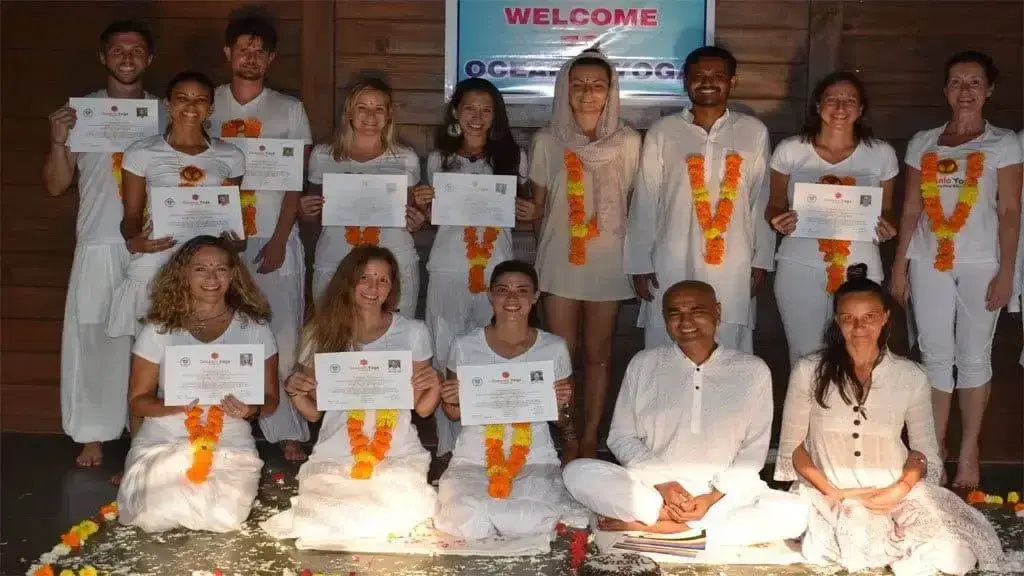
On successful completion, you receive Oceanic Yoga’s Yoga Nidra & Meditation Teacher Training certificate, recognising the programme’s personal-practice, theoretical and facilitation components. Oceanic Yoga is a Yoga Alliance Registered Yoga School; graduates can also apply to register with Yoga Alliance directly, submitting their Oceanic certificate as part of that process.
Is this useful as continuing education for yoga teachers?
Yes. For existing yoga teachers, the programme offers a focused way to deepen personal meditation while expanding the ability to guide Yoga Nidra and a wider range of meditation practices.
What can I do with the training afterwards?
Depending on your background and professional context, you can use the practices in meditation sessions, yoga classes, workshops, retreats, private work and wellbeing programmes, while continuing to deepen your own practice.
Will I feel confident guiding others after the course?
Repeated practice, conceptual understanding and communication training are designed to build confidence. The aim is to leave with a practical foundation for guiding others, while recognising that genuine authority in meditation continues to mature through practice and experience.
Where is Oceanic Yoga located?
Oceanic Yoga is in Morjim, North Goa, on a green hillock close to Morjim Beach. The residential setting keeps practice, study, meals, rest and community within one environment.
What is included in the residential course?
The current programme includes tuition, accommodation, vegetarian meals according to the course schedule, study materials and access to the practical and theoretical sessions. Confirm the final inclusion list for your selected batch when booking.
What accommodation is available?
Current residential options include air-conditioned triple-share, twin-share and private rooms, subject to availability.
Are vegetarian and vegan meals available?
The residential programme includes vegetarian meals according to the published schedule, and vegan food can be requested. Sundays are holidays and breakfast only is served.
Which Goa airport should I use?
You can arrive through Goa Dabolim Airport or Manohar International Airport at Mopa. Oceanic currently lists airport transfer from either airport at USD 30; reconfirm this when arranging travel.
How do I reserve my place?
Choose your batch and submit the Oceanic application. Once accepted, follow the current booking instructions and written payment terms to reserve your accommodation and place.
