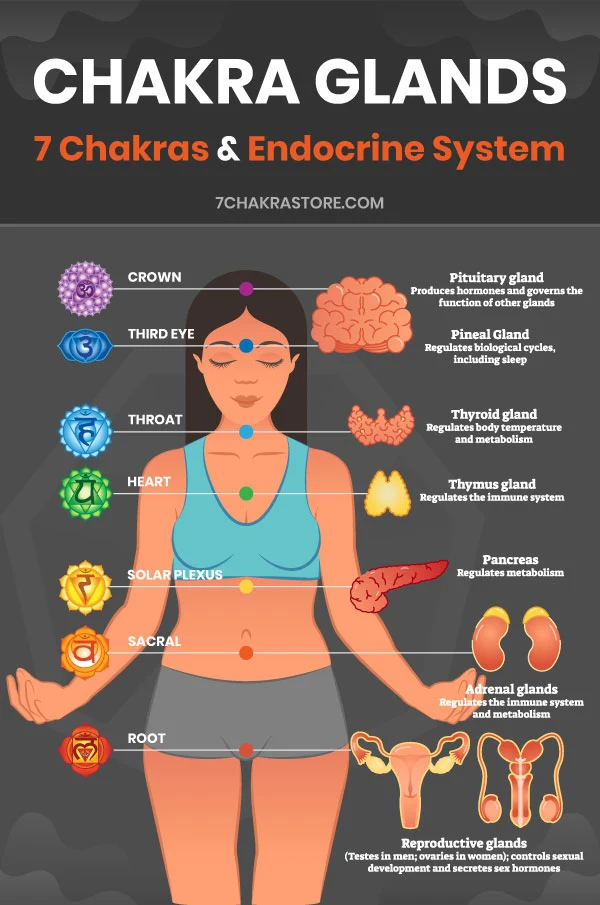
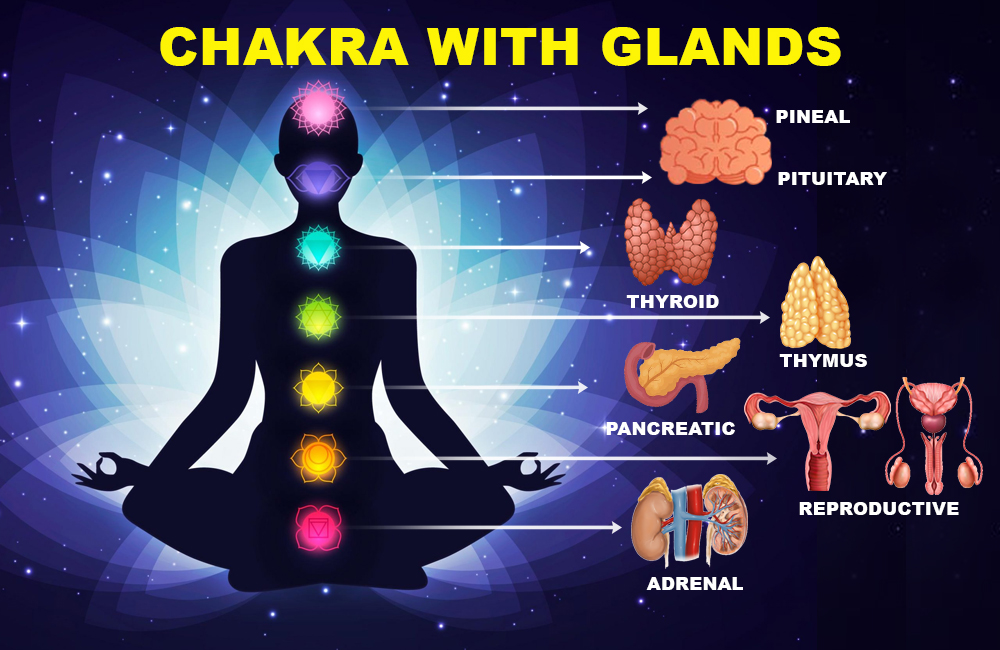
You’ve seen it all before – the neat chart that pairs each of the seven chakras with one of the seven major glands, complete with colors and an impressive appearance. But when you explore the relationship between the 7 Chakras and Your Endocrine System, you’ll discover this is only a partial truth.
The aim of this manual is to explore where this 7 chakras and glands mapping originated, which aspects it corresponds to, what stretches it, and how it can be used as a tool without being confused with a medical practice.
Where the chakra-gland map really comes from
Chakras were originated in Indian yogic and tantric schools of thought. According to ancient Indian literature, chakras were considered as an energy center of the spine which was visualized during meditation and visualization exercises. Indian literature describes energy body, gods, sounds and signs but not the hormones.
Combination of chakras with the glands belongs to a newer development in the history. This happened in early twentieth century in western esoteric literature, specifically, in Theosophical literature which tried to bring the ideas of yoga closer to the newly emerged discipline of endocrinology. Writers have developed and repeated the combination till it became an established map as we know it today.
It is important in order to explain something that you might have observed yourself: one chart shows the root chakra combined with the adrenals while another shows the same chakra connected with the gonads; crown and third eye chakras interchange the pineal and pituitary glands. A map which has alternative versions of itself cannot be considered as an anatomically proven fact but a teaching metaphor.
The chart, with honest notes
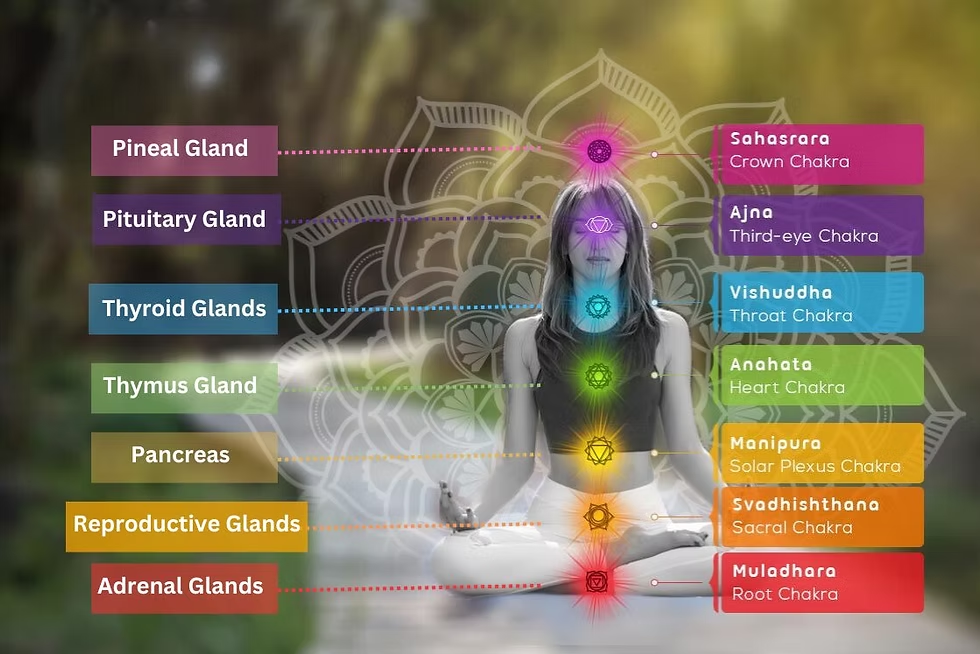
Here are the glands that go with chakras according to the most common classification, together with their pros and cons.
1. Root (Muladhara): adrenal glands. Themes: security, survival, grounding. These glands produce stress-related hormones, cortisol and adrenaline, thus giving the thematic consistency. In some practices, the root chakra is connected with gonads instead.
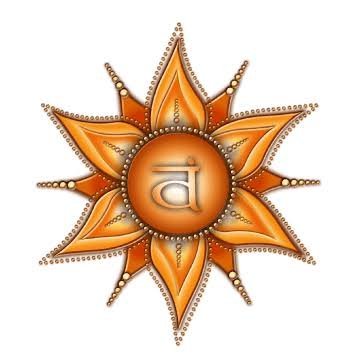
2. Sacral (Svadhisthana): gonads (ovaries/testes). Themes: enjoyment, creativity, sexuality, emotions. It is the closest connection between chakras and glands among all the connections. Gonads produce such essential hormones as estrogen, progesterone and testosterone. That’s why we devoted a separate article for it: check our Sacral Chakra and Hormones guide.
3. Solar Plexus (Manipura): pancreas. Themes: power, will, digestion. This gland is responsible for regulating the level of blood glucose and producing digestive hormones, and is located close to the stomach. Sometimes, adrenal glands are listed as the glands for the third chakra.
4. Heart (Anahata): thymus. Themes: love, compassion, unity. Thymus is a major organ of immunity in infancy and is located behind the breastbone near the heart. It should be noted that this gland performs immune functions, but also produces certain hormones.
5. Throat (Vishuddha): thyroid. Themes: expression, truth, communication. The thyroid controls metabolic function and energy; it resides in the throat. The location is obvious; the themes relating to speech are purely symbolic.
6. Third Eye (Ajna): pituitary. Themes: intuition, perception. The pituitary is known as the “master gland” because it coordinates so many other glands. While the term “intuition” seems metaphorical for something so biological, the pituitary does control perception.
7. Crown (Sahasrara): pineal. Themes: spiritual awareness, spirituality. The pineal gland regulates melatonin production and sleep-wake cycles in response to light. The “spiritual” functions of the gland are metaphorical, but the physiological function is real.
What’s solid, and what’s symbolic
One useful approach to interpreting this map is on three levels:
Sound: The glands exist, they’re actual producers of hormones, and their placement correlates generally with the positions of chakras along the midline of the body. Their functions also relate to the theme of the chakras in question: stress and security, reproduction and creativity, metabolism and expression, sleep and awareness.
Plausible but somewhat loose: Emotional state and hormonal state affecting one another. They do. Chronic stress changes cortisol balance, grief and loneliness impact sleep and appetite, and sex hormones impact mood and energy levels. Chakra language is one possible means of explaining such mind/body connections.
Unproven: The notion of chakras as physical entities, of “blocked” chakra leading to certain gland malfunction, or of any chakra treatment curing problems with thyroid, adrenals or reproductive system. There is no good evidence for any of these assumptions, and whoever says there is – overreaches.
Why the connection still feels true
Even if the science falls short of proving the existence of chakras, why do people find this model so attractive? Here are a few considerations that should not be dismissed lightly.
First of all, chakra practices (deep breathing, meditation, gentle motion, chanting) have proven physiological effects on the stress response and the nervous system. Calming down your body calms down your hormones, however you choose to label this process.
Second, the system of chakras provides a physical template for the emotional landscape. The ability to recognize that your anxiety is localized in your abdomen, or that your grief is in your chest, is an important one, and the chakra system is just one such map.
Third, it translates the vague (“I’m feeling unbalanced”) into the concrete and inspectable.
A practical way to use this framework
- Use the chakra gland correlation as a reflection technique rather than a diagnostic test:
- Scan, but do not diagnose. Begin focusing on your body from your tailbone upwards. Can you notice any areas of tension, numbness or heaviness?
- Match the energy of the corresponding chakra. Is your experience somehow related to the theme associated with that chakra? (security, creativity, power, love, expression, wisdom, meaning)?
- Implement an empowering practice for each of them. Nasal breathing for the root, hip opening for the sacral, humming/chanting for the throat, darkness/lightness sleeping habits for the crown.
- Collect hard facts for any symptoms. Fatigue, weight loss/gain, irregularities in your menstrual cycles, heart palpitations or insomnia require a consultation with a physician. Blood tests may be needed as well. Chakra practice can coexist with your treatment.
How this series connects
This article is the centerpiece of our chakra/endocrine series. Each chakra will receive its detailed coverage on the gland itself, the hormones involved, the emotions and a practice that you can begin right now. The series starts with the one which is most hormonally direct – the Sacral Chakra and your gonads. All articles in the series link back to this one, so you can always come back to the map.
Conclusion
The relationship between the 7 chakras and endocrine glands should be regarded as an intersection of an ancient map and physiology. It is neither medical theory nor does it have to be. With curiosity and healthy doubt, it will help you develop your body awareness and structure your self-care practice.
This article is purely educational in nature and does not constitute any medical advice. In case you are experiencing any concerning symptoms, please seek the opinion of a professional.