Quick answer
Prenatal yoga is gentle yoga adapted for pregnancy. It can ease back pain, improve sleep, reduce stress and anxiety, build strength and stamina for labour, and improve breathing and balance. It is safest with a qualified prenatal teacher and your doctor’s approval. It avoids hot yoga, deep twists, and lying flat on the back after the first trimester.
Key takeaways
- Best for: back pain, sleep, stress, strength, breathing, and balance.
- Safe start: most women can start in the first trimester after doctor approval. The second trimester is often the most comfortable time.
- Frequency: 2 to 3 sessions a week, 30 to 60 minutes each.
- Avoid: hot yoga, deep closed twists, deep backbends, inversions, jumping, lying flat on the back after the first trimester, and overstretching.
- Always: stop if you feel pain, dizziness, or bleeding, and tell your doctor.
What is prenatal yoga?
Prenatal yoga is yoga adapted for pregnant women. Poses are gentler. Props like bolsters, blocks, and blankets support the body. The teacher modifies every pose for the changing body and for each trimester.
It is different from a regular yoga class. A regular class may include deep twists, strong core work, and lying on the belly or flat on the back. Prenatal yoga leaves those out. It focuses on safe movement, breathing, and rest.
No experience is needed. Many women start prenatal yoga with no yoga background at all.
8 benefits of prenatal yoga
1. Less back and pelvic pain
As the belly grows, the lower back carries more weight. Gentle stretches and supported poses release tension in the back, hips, and pelvis. Many women find their daily aches ease with regular practice.
2. Better sleep
Pregnancy often disturbs sleep. Relaxation, slow breathing, and gentle movement calm the nervous system. Many women fall asleep faster and wake up less during the night.
3. Less stress and anxiety
Pregnancy brings big physical and emotional changes. Breathing practices and quiet rest lower stress hormones. A regular class also gives expecting mothers a calm, supportive space.
4. Strength and stamina for labour
Labour needs strength and endurance. Prenatal yoga builds leg strength, pelvic floor awareness, and stamina through standing poses and breath work. This preparation helps the body cope with labour better.
5. Better breathing
Breath work, or pranayama, is a core part of prenatal yoga. Slow, deep breathing increases oxygen flow and calms the mind. These same breathing skills help during contractions.
6. Better balance and posture
The centre of gravity shifts as pregnancy progresses. Balance poses and posture work help the body adjust. Good posture also reduces strain on the neck, shoulders, and lower back.
7. Less swelling and better circulation
Gentle movement supports blood flow. Ankle circles, leg stretches, and walking poses can reduce swelling in the feet and ankles. Lying on the side during rest also helps circulation.
8. Time to bond with your baby
Prenatal yoga slows life down. Quiet breathing and rest give mothers a moment to focus on their baby. Many women say this bond is one of the most valued parts of the practice.
Safe poses in prenatal yoga
These poses are commonly used in prenatal classes:
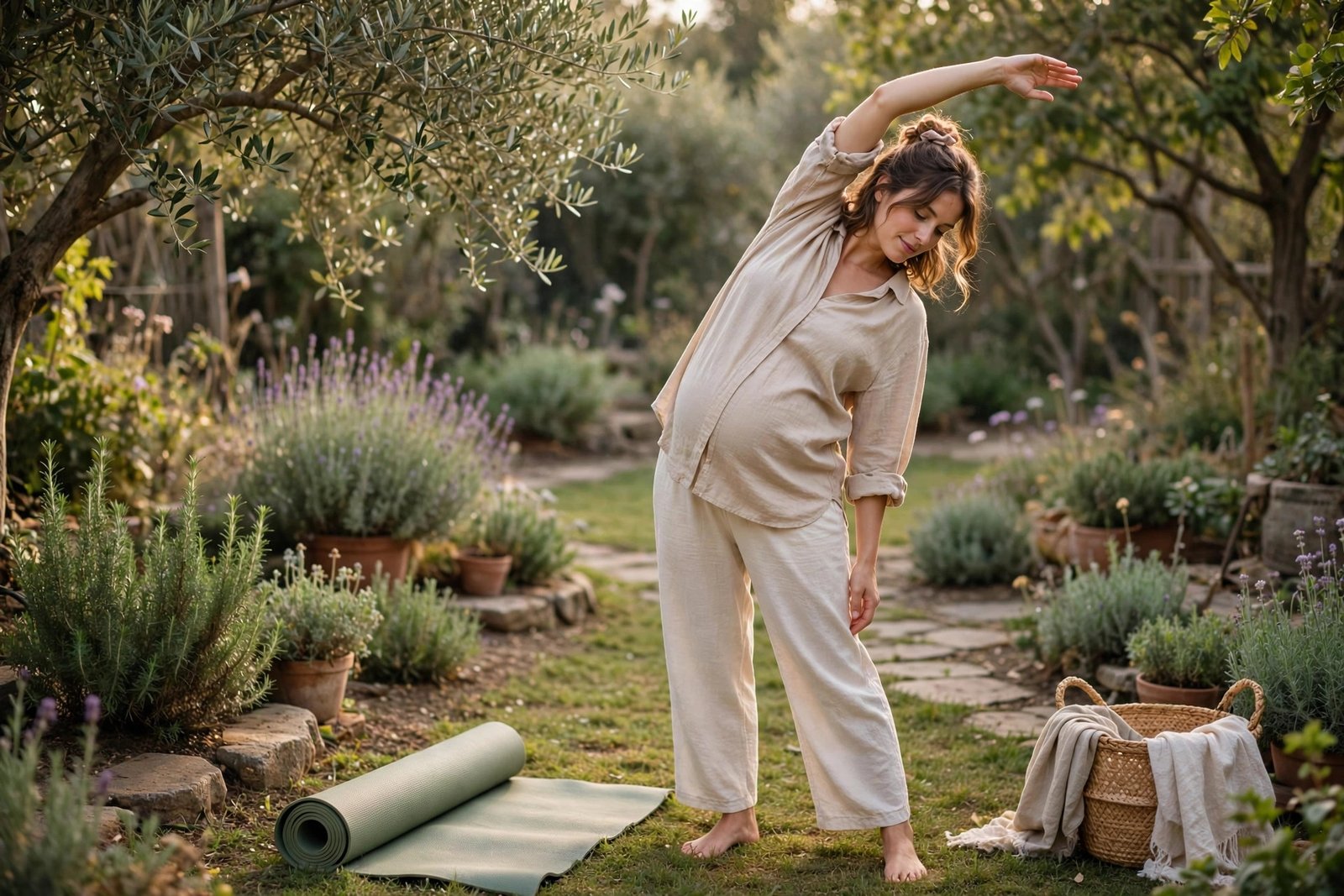
- Cat-cow: gentle spinal movement on hands and knees.
- Wide knee child’s pose: restful stretch with room for the belly.
- Butterfly pose: seated hip opener with feet together.
- Supported warrior II: leg strength with a wall or chair nearby.
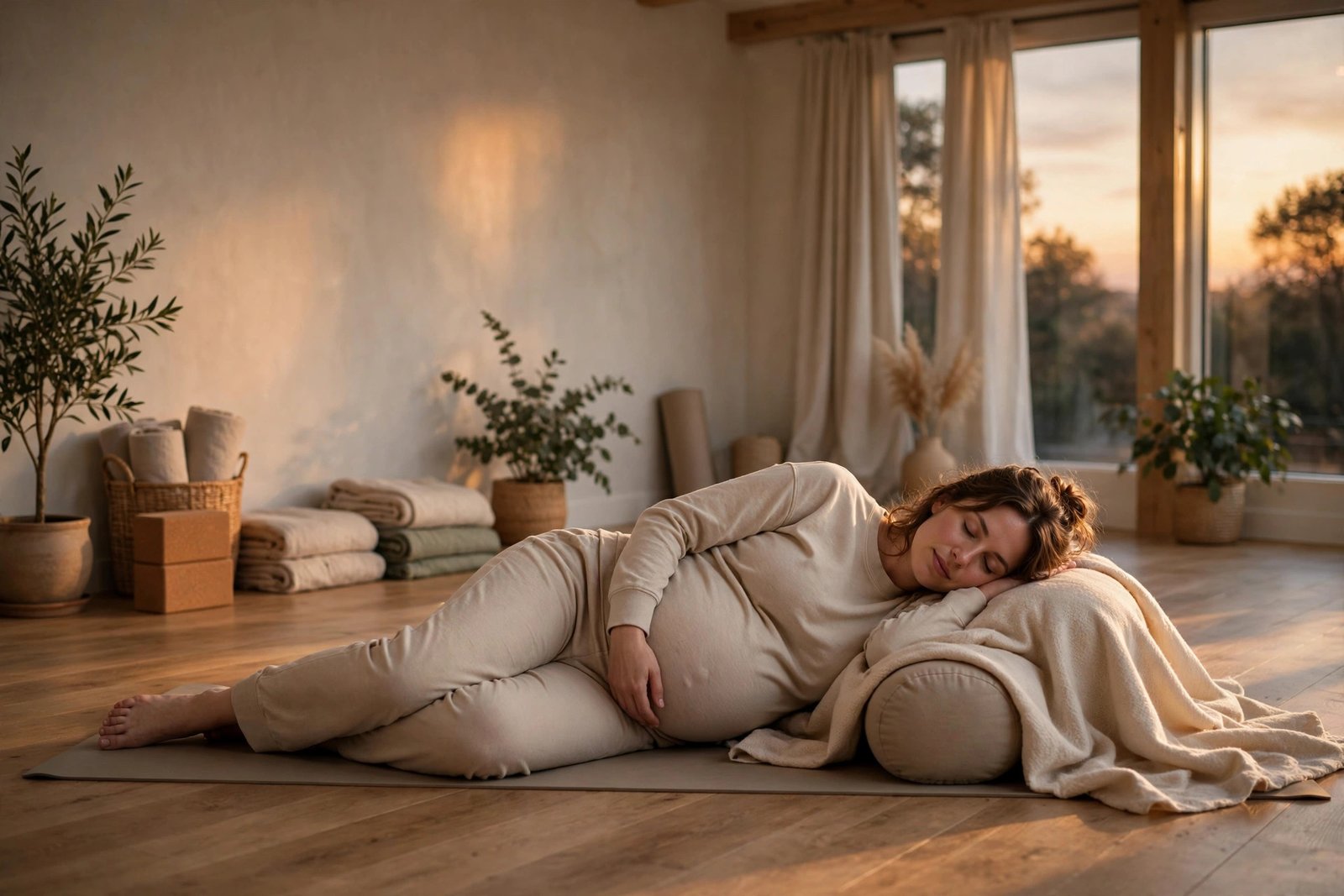
- Side lying rest: the safe version of savasana in pregnancy.
- Seated breathing: slow diaphragmatic breathing to calm the mind.
What to avoid during pregnancy yoga
- Hot yoga or heated rooms. Overheating is unsafe in pregnancy.
- Lying flat on the back after the first trimester. It can press on a major vein and reduce blood flow.
- Deep closed twists. They compress the belly.
- Deep backbends and inversions. They strain the abdominal area and affect balance.
- Jumping or fast transitions. Balance is less stable in pregnancy.
- Overstretching. The hormone relaxin loosens joints, so stretching too far risks injury.
- Holding the breath. Breath should stay smooth and steady throughout.
Prenatal yoga by trimester
First trimester. Keep practice gentle. Rest when tired. Avoid overheating and strong core work.
Second trimester. This is often the best time to practise. Energy usually returns. Widen your stance as the belly grows.
Third trimester. Slow the practice down. Use more props and take more rest. Focus on breathing, pelvic floor awareness, and relaxation.
How often should you practise?
Two to three sessions a week is a good rhythm. Each session can last 30 to 60 minutes. Short daily breathing and stretching also helps. Always listen to your body. Rest is part of the practice, not a failure in it.
Is prenatal yoga safe?
For most healthy pregnancies, prenatal yoga is safe with two conditions. First, get your doctor’s approval before starting. Second, practise with a teacher trained in prenatal yoga.
Stop and call your doctor if you notice any of these: pain, vaginal bleeding, dizziness, shortness of breath, regular contractions, or leaking fluid. These are warning signs, not normal practice discomfort.
Frequently asked questions
Can I start prenatal yoga in the first trimester?
Yes, with your doctor’s approval. Keep the practice gentle. Tell your teacher you are pregnant so poses can be adapted.
Can I do prenatal yoga if I have never done yoga?
Yes. Prenatal yoga is designed for beginners. The teacher guides every pose and offers props and easier options.
Does prenatal yoga help with normal delivery?
It can help prepare the body. Strength, stamina, and breathing skills are useful during labour. But no practice can guarantee a vaginal birth. Discuss your birth plan with your doctor.
Can I practise prenatal yoga at home?
Yes, once you know the safe modifications. A few guided classes first help you learn correct alignment. Online videos should come from qualified prenatal teachers only.
When should I stop prenatal yoga?
Stop and contact your doctor if you feel pain, bleeding, dizziness, contractions, or leaking fluid. Also pause practice if your doctor advises rest for any reason.
A gentle closing note
Pregnancy asks a lot of the body. Prenatal yoga gives something back: movement without strain, breath without rush, and rest without guilt. Start slowly, practise with a trained teacher, and let comfort guide every pose.
This article shares general information only. It is not medical advice. Always check with your doctor before starting a new practice in pregnancy.