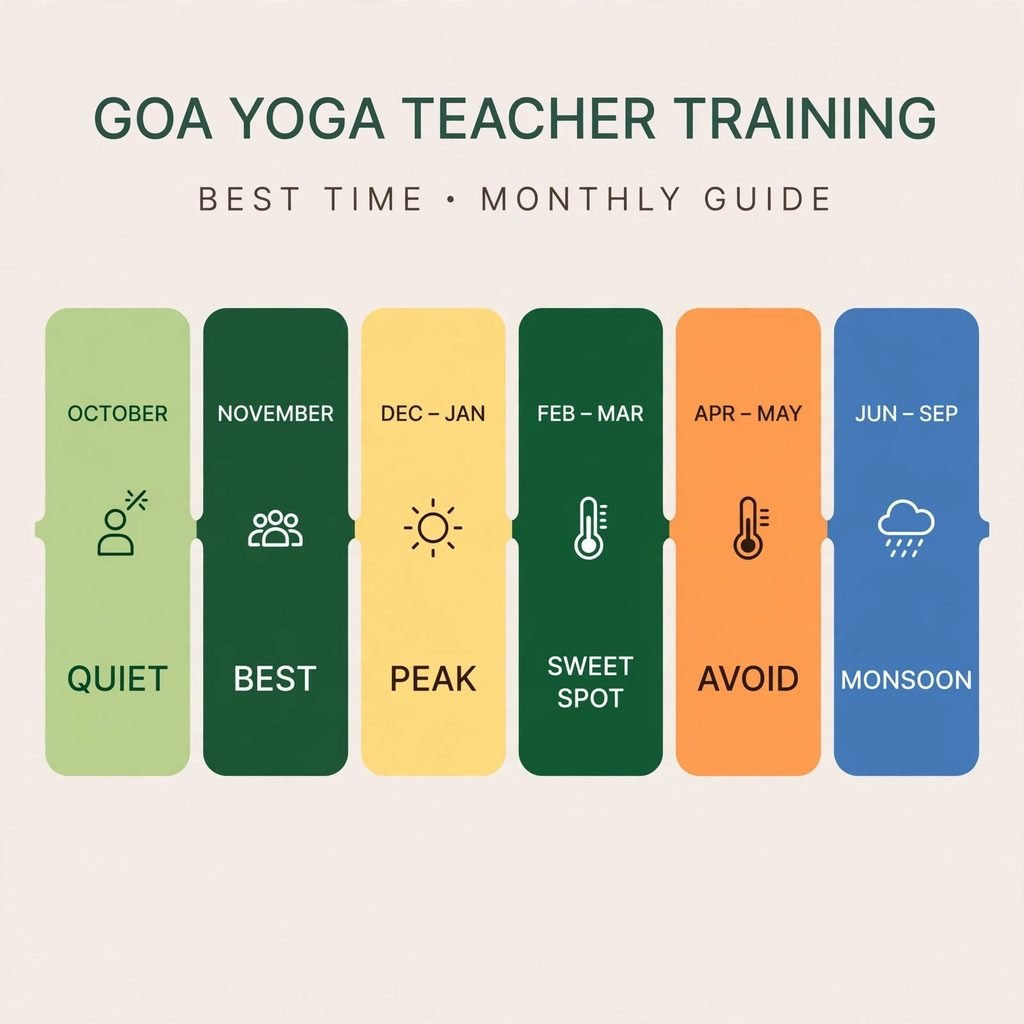
The best time to do yoga teacher training in Goa is late October to March, when the weather is dry, cool, and comfortable for daily practice. December and January are the most popular (and most crowded) months. If you want the same great weather with smaller batches and better prices, late October, November, and March are the sweet spot.
Choosing when to train matters almost as much as choosing where. Bad timing means humid, sweaty practice sessions, monsoon disruptions, or a shala so packed you barely get noticed. Here’s how to time it right.
Goa’s Yoga Season at a Glance
| Period | Weather | Crowd Level | Best For |
| Late Oct – Mid Nov | Warm, drying out after monsoon, occasional rain | Low | Best value, quieter batches |
| Dec – Jan | Cool, dry, perfect practice weather | High (peak season) | Festive atmosphere, meeting more students |
| Feb – Mar | Warm, dry, sunny | Medium | Great weather, thinner crowds than Dec–Jan |
| Apr – May | Hot, humid, pre-monsoon | Low | Not recommended : heat makes intensive practice hard |
| Jun – Sept | Monsoon, heavy rain | Very low | Most schools pause or reduce batches |
Month-by-Month Breakdown
October (Late Month) : The Quiet Opener
The monsoon is tapering off and Goa starts drying out. Days are warm and occasionally humid, but it’s the first real window of the season. Fewer tourists means smaller training batches and more one-on-one time with your teacher. Great if you want authentic training without the crowds.
November : Comfortable and Underrated
This is arguably the best-kept secret of Goa’s yoga calendar. The weather is settling into the dry season : warm days, pleasant evenings : and prices are still lower than the December peak. Beaches are calm, and shalas haven’t hit full capacity yet.
December & January : Peak Season
This is when everyone comes. Weather is at its best : cool mornings, sunny days, low humidity, ideal for asana practice and outdoor sessions. The trade-off: batches fill up fast, prices are highest, and Goa’s beaches and villages get busy with tourists. Book at least 2–3 months ahead if you want this window.
February & March : The Sweet Spot
The weather is still excellent and mostly dry, but the December–January rush has passed. This is a strong pick if you want peak-season conditions without peak-season crowds or prices. By late March, temperatures start climbing, so aim for early-to-mid March if possible.
April & May : Generally Avoid
Heat and humidity climb sharply before the monsoon arrives. Long days of asana, pranayama, and outdoor sessions become genuinely uncomfortable. Most experienced trainees and instructors recommend skipping this window unless you specifically prefer heat.
June – September : Monsoon Season
Heavy, near-daily rain makes outdoor practice and travel difficult. Many schools scale back, pause entirely, or move sessions indoors only. Not typically recommended for a first 200-hour training unless a school specifically designs its program around the monsoon (some do, for a very different, introspective experience).
Weather vs. Budget: How to Choose
- Want the best weather and don’t mind the cost? Go for December or January, and book early.
- Want great weather at a better price with more personal attention? November or late February/early March are ideal.
- On a tight budget and comfortable with some heat/humidity? Late October is worth considering.
- Avoid entirely: April, May, and peak monsoon (July–August) for a standard outdoor-based YTT.
Other Things That Change With the Season
- Flight prices : international flights to Goa are highest around Christmas/New Year and drop noticeably in November and March.
- Batch size : peak season batches can be double the size of shoulder-season ones.
- Beach access : during monsoon, water conditions make ocean-side yoga and evening beach walks impractical.
- Local atmosphere : December brings festive energy (great for some, distracting for others focused purely on training).
Plan Your Training in Morjim, Goa
At Oceanic Yoga International, we run our 200-hour and 300-hour Yoga Alliance–certified training in Morjim, North Goa : a quieter stretch of coast that avoids the party-beach crowds while staying close to everything Goa offers. We keep batch sizes intentionally small across every season, so even in December and January you’re not lost in a crowd.
👉 Check upcoming 200-Hour YTT dates
👉 View our 300-Hour Advanced Training schedule
👉 Talk to us about which month fits your goals and budget
FAQs
1. What is the best month to do yoga teacher training in Goa?
November and February are generally considered the sweet spot : excellent dry-season weather, without the peak December–January crowds and pricing.
2. Is December a good time for YTT in Goa?
Yes, weather-wise it’s ideal, but it’s the busiest and most expensive month. Book well in advance if you want a December or January start date.
3. Should I avoid the monsoon season for yoga teacher training?
For a standard outdoor-focused 200-hour course, yes. Heavy rain from June to September disrupts outdoor practice and travel. Some schools run special monsoon-focused programs, but it’s not the typical choice for a first YTT.
4. Is Goa too hot for yoga training in summer?
April and May bring high heat and humidity that make long practice sessions physically demanding. Most trainees prefer the October–March window instead.
5. Do prices change depending on the season?
Yes, December and January typically carry the highest prices due to demand, while November and February–March often offer the same quality at a better rate.
6. How far in advance should I book for peak season?
For December or January start dates, aim to book at least 2–3 months ahead, as popular batches fill up quickly.