 Skip to main content Skip to footer
If you’ve been searching for yoga to relieve back pain, you’ve probably already tried a dozen quick fixes — heating pads, painkillers, maybe a foam roller collecting dust in the closet. This routine is different. It’s the same sequence I use with clients to bring fast relief, and it’s built with progressions and modifications so it works whether you’re highly active or mostly sedentary.
Related read: Yoga Teacher Training in India
Before jumping into the poses, it helps to understand why your back hurts in the first place.
What’s Really Causing Your Back Pain?
Most chronic back pain traces back to one or more of these four root causes:
- Lack of hip strength
- Lack of hip mobility
- Lack of spinal mobility
- Lack of core strength
This is why long-term relief requires more than stretching alone. This routine targets two things at once: loosening the tight muscles around your lower back, hips, and spine, while strengthening the opposing muscle groups — your core and glutes — that are meant to support your back in the first place.
Why both matter: Stretching alone feels great in the moment, but it doesn’t fix the underlying weakness that caused the tightness. If you only stretch, you’re often just managing symptoms while the real problem — weak stabilizing muscles — keeps getting worse. Pairing stretches with targeted strengthening is what turns short-term relief into long-term results.
We start lying on your back, which is the ideal position for early core activation. Lying supine lets your spine rest in a neutral position, so you’re not accidentally compensating with your lower back the way you might standing up.
Related read: How Yoga Reduces Back Pain
The Routine: 4 Yoga Poses to Relieve Back Pain
1. Cat/Cow Pose (1–3 minutes)
Cat/Cow is one of the most effective poses for mobilizing the spine. It moves your back through flexion and extension, builds spinal mobility, and releases built-up tension in the lower back. It also teaches you what a neutral spine actually feels like — not overly arched, not overly rounded — which can carry over into better posture throughout your day.
How to do it:
- Start in a tabletop position, hands under shoulders, knees under hips.
- Exhale as you round your spine upward, drawing your chin toward your chest (Cat).
- Inhale as you drop your belly, lift your chest and head, and let your spine curve downward (Cow).
- Move slowly with your breath for 1–3 minutes.
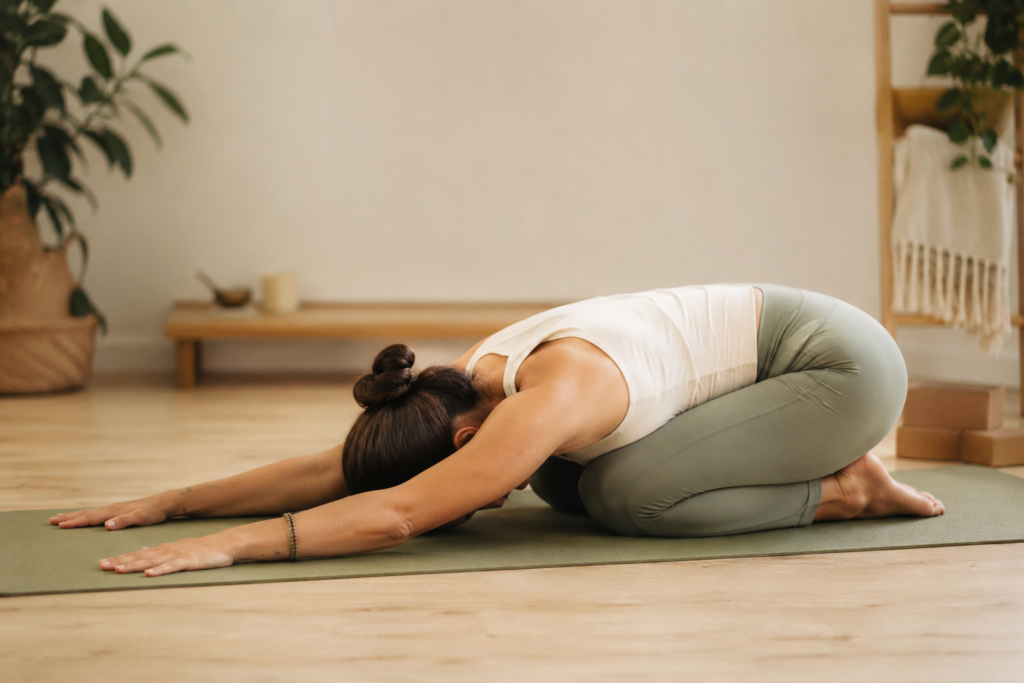
2. Child’s Pose (1–3 minutes)
Child’s Pose gently decompresses the spine by lengthening it, which takes pressure off the lower back and provides an easy, restorative stretch.
How to do it:
- Kneel with your knees spread wide, hips resting back toward your heels.
- Exhale and fold your torso over your thighs.
- Lengthen your neck and spine, reaching the crown of your head away from your shoulders.
- Rest your forehead on the mat, arms extended in front of you.
3. Cobra Pose (1–3 minutes)
Cobra Pose restores the natural curve of your lower back while lightly activating your abdominal muscles, which helps support the lumbar spine rather than strain it.
How to do it:
- Lie on your stomach with legs extended and feet together.
- Place your hands beside your chest, forearms resting on the mat.
- Inhale, lengthen through your spine, and lift your chest gently off the floor.
- Go only as far as feels comfortable — this should be a gentle stretch, not a strain. Stop immediately if you feel pain.
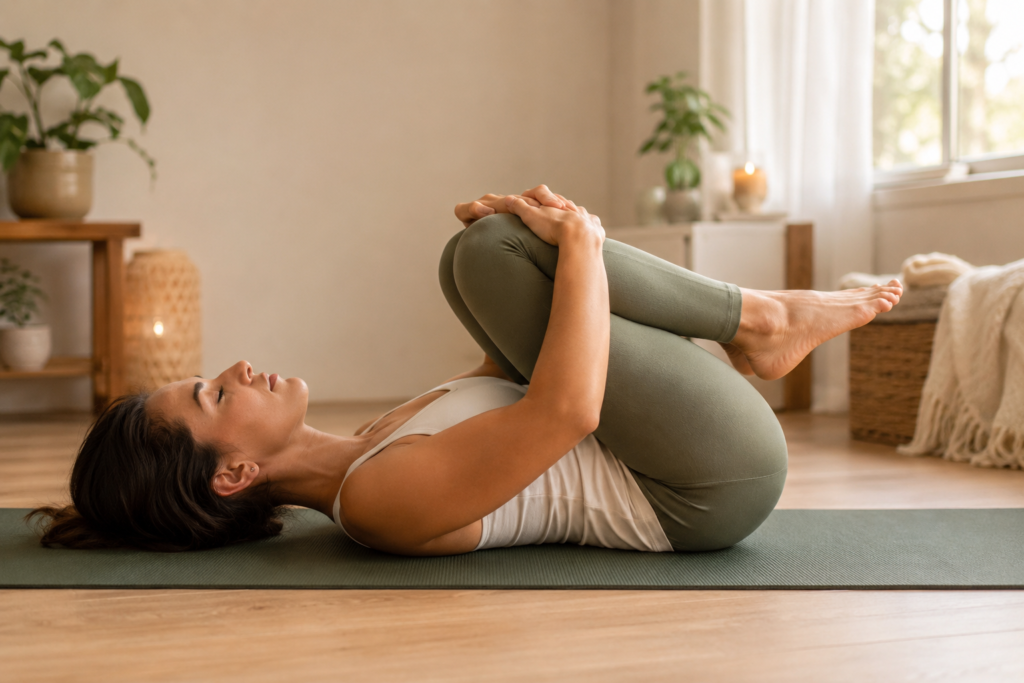
4. Knee-to-Chest (1–3 minutes)
This pose delivers a simple, effective stretch by giving your lower back a gentle, natural massage as you shift your body weight side to side.
How to do it:
- Lie on your back in a supine position.
- Hug both knees into your chest.
- Slowly rock your torso from side to side while holding your legs securely.
Tips to Get the Most Out of This Routine
- Consistency beats intensity. A short daily session will do more for your back than one long, occasional stretch.
- Breathe through each pose. Slow, controlled breathing helps your muscles release rather than tense up.
- Never push into sharp pain. Mild stretching sensation is normal; sharp or shooting pain is not — stop and check in with a professional.
- Add strengthening work. Pair this stretching routine with core and glute exercises (like bridges or bird-dogs) to address the muscular weakness driving the pain in the first place.
FAQs About Yoga to Relieve Back Pain
1. Can yoga really relieve back pain? Yes. Yoga combines stretching and controlled movement that improves spinal mobility, releases muscle tension, and — when paired with strengthening poses — builds the core and hip stability needed to prevent pain from returning.
2. How often should I do yoga for back pain relief? For best results, aim for 10–15 minutes daily, or at minimum 4–5 times a week. Short, consistent sessions are more effective than occasional long ones.
3. Is it safe to do yoga with a herniated disc or chronic back condition? Gentle poses like Cat/Cow and Child’s Pose are generally safe, but if you have a diagnosed spinal condition, herniated disc, or severe pain, check with your doctor or physical therapist before starting any new routine.
4. Which yoga pose is best for immediate back pain relief? Child’s Pose and Cat/Cow tend to offer the fastest relief because they decompress the spine and release tension without requiring strength or exertion.
5. Is stretching alone enough to fix back pain long-term? No. Stretching relieves tightness temporarily, but lasting relief requires strengthening the core, hips, and glutes as well — otherwise the underlying weakness that caused the pain will keep bringing it back.
6. Can beginners with no yoga experience follow this routine? Yes. This routine is designed for all fitness levels, with each pose including modifications so beginners and more active practitioners can both benefit safely.
Conclusion
Back pain rarely has one single cause — it’s usually a mix of tight hips, a stiff spine, and a weak core working against you. This yoga routine addresses all of it: Cat/Cow and Child’s Pose to release tension and improve mobility, Cobra to restore your spine’s natural curve, and Knee-to-Chest to ease your lower back with gentle movement. Practiced consistently — and paired with basic core and glute strengthening — this simple sequence can be your go-to solution for both fast relief and long-term back health. Start with just a few minutes a day, listen to your body, and let your practice build from there.
