 Skip to main content Skip to footer

To become a trauma-informed yoga instructor, you first need a foundational 200-hour Yoga Alliance certification. From there, you build trauma-informed skills either through a dedicated module inside your training or through a separate specialized course covering nervous system regulation, invitational language, and consent-based teaching. Most paths also include supervised practice teaching and ongoing continuing education. It typically takes a few months to a year, depending on the route you choose.
If you’ve searched this exact question, you’ve probably noticed the answers online are scattered, some talk about clinical certifications, others about short online courses. Here’s the clear, practical path
Step 1: Get Your Foundational Yoga Certification (RYT 200)

This is non-negotiable almost everywhere. Nearly every trauma-informed training, whether it’s a short add-on course or a full specialized certification, requires you to already hold a Yoga Alliance registered 200-hour certification (RYT 200). This makes sense: trauma-informed teaching is a layer on top of solid, foundational teaching skills, not a replacement for them.
If you haven’t completed this step yet, this is genuinely where to start. A good 200-hour program also gives you a head start, since many now include trauma-informed teaching basics as part of the standard curriculum.
Step 2: Learn the Nervous System Basics
Before diving into a dedicated trauma-informed course, it helps enormously to understand the foundation it’s built on: how the nervous system responds to stress and trauma. Key concepts worth getting familiar with include:
- The basics of fight, flight, and freeze responses
- Polyvagal theory and how it applies to movement and breath
- Interoception, or the ability to notice internal body sensations
- How trauma can affect posture, breath, and a student’s comfort with touch
Many trauma-informed courses teach this from the ground up, so you don’t need a clinical background, just curiosity and willingness to learn.
Step 3: Choose Your Trauma-Informed Training Route

This is where paths genuinely split, so it’s worth understanding the options clearly.
| Route | What It Looks Like | Best For |
| Built-in module | Trauma-informed teaching included within a 200-hour or 300-hour training | Teachers who want this woven into their foundational skills from day one |
| Short specialized course | A separate course, often 25 to 100 hours, focused specifically on trauma-informed or trauma-sensitive teaching | Already-certified teachers wanting to add this as a specialty |
| Clinical trauma-sensitive certification | Programs like TCTSY, usually requiring or strongly preferring a mental health background | Teachers planning to work in clinical, therapeutic, or recovery settings |
Most yoga teachers choose the first or second route. The third is a more specialized, clinical path, typically pursued by those already working in, or alongside, mental health care.
Step 4: Get Real Teaching Practice In
Knowledge alone doesn’t make you trauma-informed in practice. Look for a training that includes:
- Practice teaching with invitational, choice-based language
- Feedback from trainers on your cueing and classroom presence
- Discussion of real scenarios: how to handle a student who becomes overwhelmed, how to offer (or not offer) touch, how to structure a predictable class
Some programs also require a practicum, meaning a set number of hours actually teaching trauma-informed classes before certification is finalized.
Step 5: Understand Your Scope of Practice
This step matters more than people expect. Be honest with yourself and your future students about what you’re qualified to do:
- You can teach safe, inclusive, trauma-informed classes to the general public
- You are not providing trauma therapy or clinical treatment
- If you want to work specifically with trauma survivors in a therapeutic context, additional training alongside licensed mental health professionals is the appropriate path, not a substitute for it
Being clear about this protects both you and your students, and it’s a mark of a genuinely well-trained teacher.
Step 6: Keep Learning (Continuing Education)
Trauma-informed teaching isn’t a one-time box to tick. Many instructors continue building this skill through:
- Yoga Alliance Continuing Education (YACEP) hours focused on trauma-informed topics
- Mentorship or peer supervision with more experienced trauma-informed teachers
- Ongoing study of nervous system science as the field evolves
How Long Does This Actually Take?
- 200-hour foundational training: 3 to 4 weeks, full time
- Trauma-informed module within your 200 or 300-hour training: No extra time, it’s built in
- Separate specialized course: Anywhere from a weekend to several months, depending on hours and format
Many teachers complete their foundational certification and trauma-informed training together, by choosing a 200-hour or 300-hour program that already includes a dedicated nervous system and trauma-informed component.
The Fastest Path: One Training, Both Skills
If you’re starting from scratch, the most efficient route is choosing a Yoga Alliance registered training that teaches trauma-informed principles as part of the core program, rather than doing your 200-hour first and searching for a separate add-on course afterward.
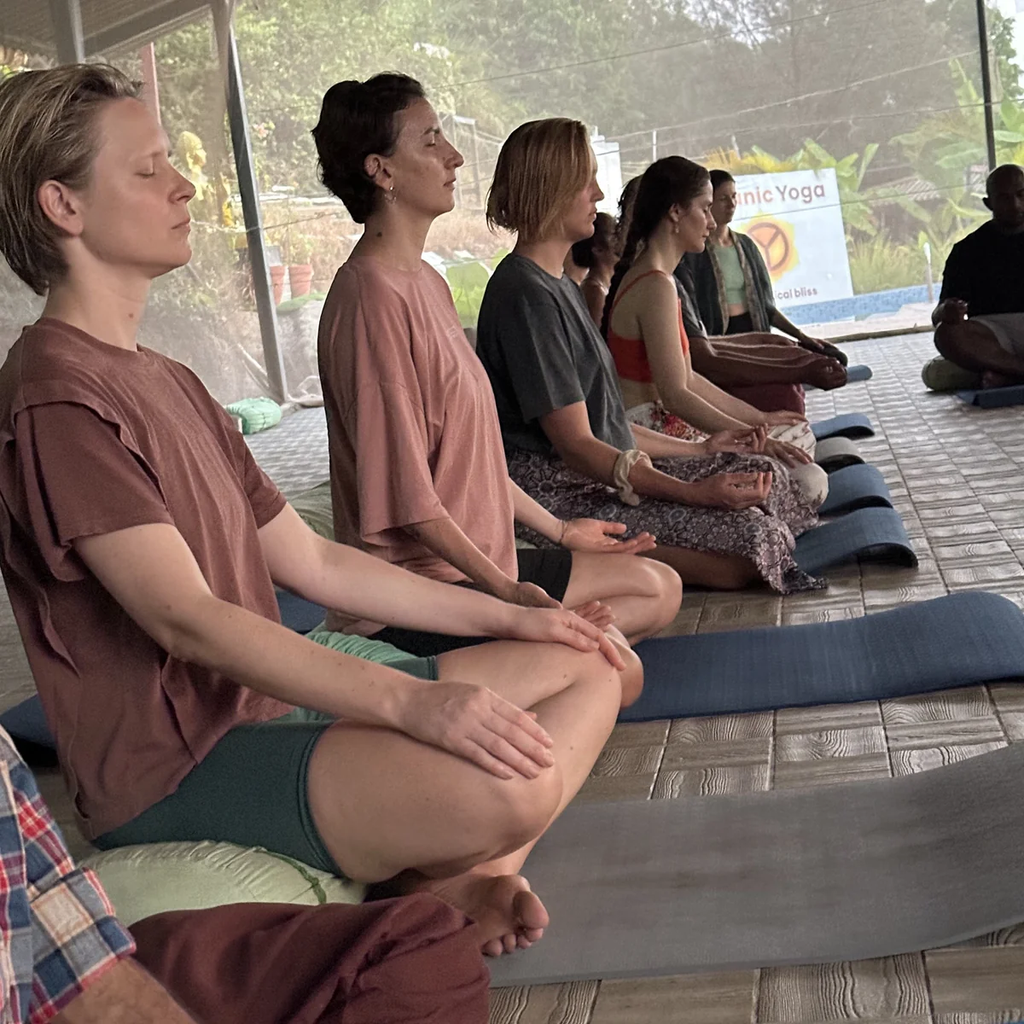
At Oceanic Yoga International in Morjim, Goa, our Nervous System Regulation & Trauma-Informed Yoga Teacher Training is built exactly this way, combining foundational teaching skills with real, dedicated nervous system and trauma-informed education in one program.
👉 See the Nervous System Regulation & Trauma-Informed Yoga Teacher Training in Goa
👉 Explore our standard 200-Hour Yoga Teacher Training
👉 Ask us which path fits your goals
FAQs
1. Do I need a 200-hour certification before trauma-informed training?
Yes, in almost all cases. Trauma-informed and trauma-sensitive training programs are built on top of foundational yoga teaching skills, so a Yoga Alliance registered 200-hour certification is typically required first.
2. How long does it take to become a trauma-informed yoga instructor?
It depends on your route. A built-in module within your 200 or 300-hour training adds no extra time. A separate specialized course can take anywhere from a weekend to several months.
3. Do I need a psychology or mental health background?
No, not for general trauma-informed teaching. A mental health background becomes more relevant if you want to pursue clinical, trauma-sensitive certifications like TCTSY, which are typically aimed at healthcare and mental health professionals.
4. Is trauma-informed yoga teaching the same as trauma therapy?
No. Trauma-informed teaching trains you to teach safely and inclusively. It is not a substitute for clinical trauma therapy, which should be provided by a licensed mental health professional.
5. Can I learn trauma-informed teaching as part of my 200-hour training?
Yes. A growing number of 200-hour and 300-hour Yoga Alliance programs include a dedicated trauma-informed and nervous system regulation module as part of the standard curriculum.
What’s the fastest way to become certified in both yoga teaching and trauma-informed practice?
Choose a single Yoga Alliance registered program that combines both, rather than completing a standard 200-hour first and searching for a separate trauma-informed add-on afterward.
