 Skip to main content Skip to footer
At its core, the Philosophy of Yoga is the science of unifying body, mind, and spirit. This ancient discipline traces its roots to India, where the sage Patanjali is revered as the “Father of Yoga” for systematizing its principles into a coherent path of practice. Far more than a physical routine, yoga bridges the outer body with the inner soul, offering both practical wellness benefits and a deeper route to self-realization.
For those who commit to it consistently, structured yoga teacher training in India does more than build a healthy lifestyle — it becomes a genuine tool for self-inquiry and awakening.
Considering a deeper dive into this practice? Get a 10% discount on our Yoga TTC Course for a limited time.
For decades, this spiritual dimension of yoga sat quietly in the background of a world chasing material progress. But since the pandemic, a much larger share of people worldwide have turned “health-conscious,” bringing yoga back into daily conversation. A rolled-out mat at sunrise is now a common sight in homes everywhere. Yet yoga was never meant to be just a sequence of poses performed as the sun comes up — its philosophy runs far deeper.
Related reading: My 200-Hour and 300-Hour Yoga Teacher Trainings Each Changed My Life Dramatically — But in Completely Different Ways
What Does Hinduism Say About the Philosophy of Yoga?
Yoga does not belong to a single religion — it is, at its essence, a practice for all of humanity. Still, understanding its philosophical foundations requires looking back at the schools of Hinduism where these ideas were first formalized. Two schools stand out for their close relationship: the Samkhya school and the Yoga school.
Purusha and Prakriti: The Two Universal Realities
Samkhya and Yoga philosophy both describe existence through two fundamental principles:
- Purusha — pure Consciousness
- Prakriti — Matter
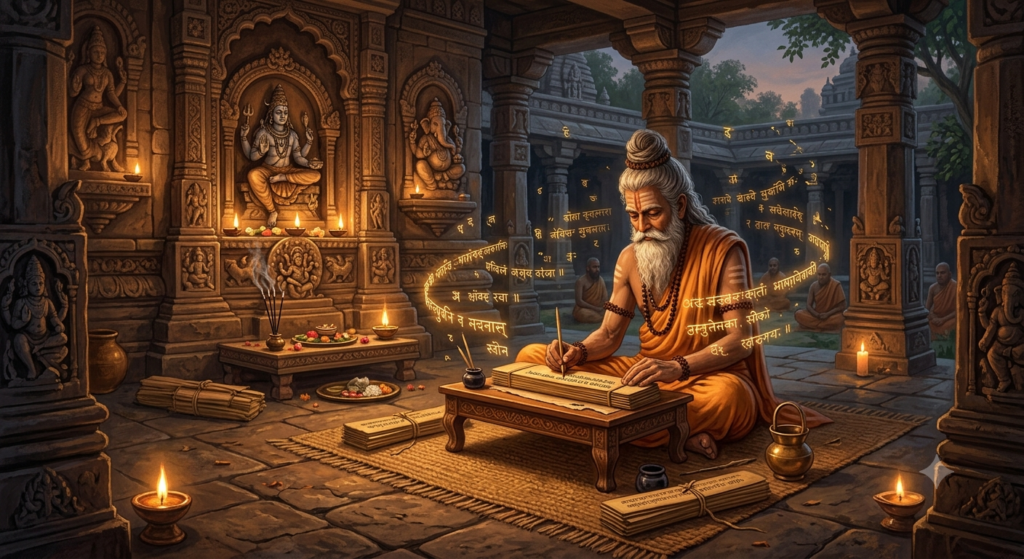
When consciousness and matter combine, a living being (Jiva) is created. Think of a moment from yesterday when you watched a sunset — your consciousness perceived that moment and stored it as memory. This is the interaction of awareness and matter within a living being. An inanimate object, by contrast, cannot register such an experience.
The challenge is that no ordinary being can perfectly balance the elements — like the senses — that connect Purusha to Prakriti. This imbalance is the root of all forms of bondage. Moksha, or liberation, is the release from these bonds — and it is the ultimate goal that the philosophy of yoga points toward.
The Three Gunas: Why We’re All Different
Every person has a unique mix of traits. Some are wise, some are restless, some are sluggish, some are driven. The philosophy of yoga explains this through the concept of gunas — the three fundamental qualities of nature:
| Guna | Represents |
|---|---|
| Satva | Wisdom, clarity, and goodness |
| Rajas | Passion, activity, and desire |
| Tamas | Inertia, ignorance, and destruction |
According to yoga philosophy, every individual is a unique fusion of these three gunas, with one or more dominating at different times. The practice of yoga works to bring these qualities into balance, ultimately guiding the practitioner toward Samadhi — a state of deep meditative absorption and freedom from imbalance.

Why the Philosophy of Yoga Matters Today
As more people rediscover “healthy habits” as part of daily life, yoga is no longer just a wellness trend — it’s becoming a lens for living intentionally. Understanding its philosophical roots transforms yoga from a physical workout into a lifelong path toward balance, self-awareness, and liberation. This is exactly the depth explored in immersive yoga teacher training in India, where students go beyond asanas to study the philosophical texts that gave yoga its meaning in the first place.
FAQs on the Philosophy of Yoga
Q1. What is the philosophy of yoga in simple terms? The philosophy of yoga is the practice and understanding of unifying body, mind, and spirit. It teaches that true wellness — and eventually liberation (Moksha) — comes from balancing consciousness (Purusha) and matter (Prakriti).
Q2. Who is known as the father of yoga? The sage Patanjali, from India, is widely regarded as the “Father of Yoga” for compiling the Yoga Sutras, which systematized yogic philosophy and practice.
Q3. What is the connection between Samkhya and Yoga philosophy? Both schools share the same core framework: the universe is composed of Purusha (Consciousness) and Prakriti (Matter). Yoga philosophy builds on Samkhya’s theoretical foundation by offering a practical path — through discipline and meditation — to achieve liberation.
Q4. What are the three gunas in yoga philosophy? The three gunas are Satva (wisdom and goodness), Rajas (passion and activity), and Tamas (inertia and destruction). Every person is a unique combination of these qualities, and yoga practice helps balance them.
Q5. Is yoga only a physical exercise? No. While physical postures (asanas) are one component, yoga philosophy views the practice as a complete path encompassing ethical discipline, breath control, meditation, and self-realization — ultimately leading toward Moksha or Samadhi.
Q6. Does yoga belong to a specific religion? No. Although its philosophical roots are documented within Hindu schools of thought like Samkhya and Yoga, yoga itself is considered a universal practice for humankind, not confined to any single religion.
Q7. How can I go deeper into yoga philosophy? Structured programs like a yoga teacher training in India offer immersive study of these philosophical foundations alongside physical practice, helping students connect theory with lived experience.
Conclusion
The Philosophy of Yoga is far richer than the physical postures most people associate with the practice today. Rooted in the teachings of Patanjali and closely tied to the Samkhya school of Hindu philosophy, yoga offers a framework for understanding consciousness, matter, and the imbalances — the gunas — that shape who we are. Its ultimate promise is not just a healthier body, but Moksha: liberation from the bonds that keep us from our truest selves.
As the modern world rediscovers the value of healthy living, returning to yoga’s philosophical roots offers something deeper than a morning routine — it offers a path to self-awareness and inner freedom. Whether you’re rolling out a mat for the first time or considering a structured yoga teacher training in India to deepen your practice, understanding this philosophy is where the real transformation begins.
Ready to explore yoga beyond the mat? Get a 10% discount on our Yoga TTC Course — limited time offer.
