Our bodies constantly interact with the energies around us. Each chakra stores and channels pranic energy. Prana means life-force energy. Chakras work within our energy body, and they affect our physical body too.
The second of the seven main chakras is the Sacral Chakra, or Svadhishthana Chakra. It is a pivot point for our sense of well-being. It awakens creativity and sexuality. It also supports the bladder, kidneys, and reproductive organs.
This guide explains the sacral chakra in full. You will learn its meaning, location, and characteristics. You will also learn the signs of imbalance and simple ways to heal it.
What Is the Sacral Chakra?
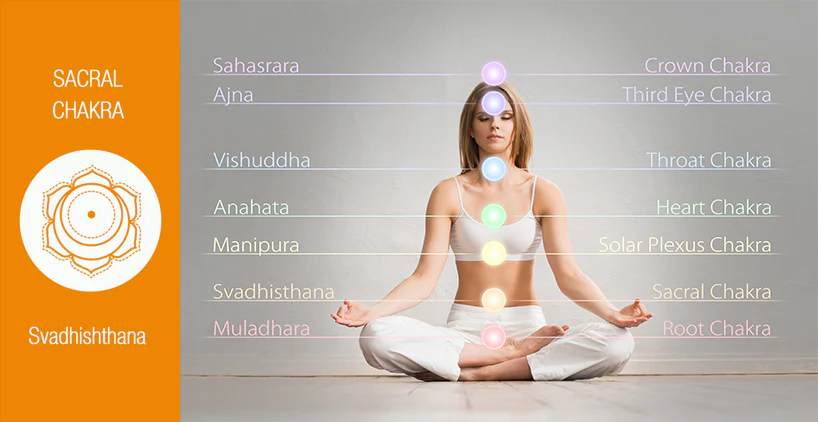
The sacral chakra is the second energy center of the body. It carries the vital force called vyana. Vyana is the energy of circulation. This chakra connects with the water element and the bright orange color. Its purpose is to help us let go, accept change, and transform. It governs creativity, intuition, and sexual pleasure.
What Is the Meaning of the Sacral Chakra?
Svadhishthana is the Sanskrit name of this chakra. It means “dwelling place of the Self.” The name points to personal growth. It supports our exploration of sexuality, desires, and creativity. It is called our own place because it is where we settle into our mind, thoughts, and awareness.
Where Is the Sacral Chakra Located?
It sits in the lower abdomen, four fingerbreadths below the navel.
What Is the Sacral Chakra Responsible for?
It stores and distributes vyana prana and the water element. It relates to the bladder, kidneys, and reproductive organs. It keeps energy flowing smoothly through these areas.
Sacral Chakra Characteristics
What Is the Sacral Chakra Symbol?

The symbol of Svadhishthana Chakra shows circles, a crescent moon, and a lotus flower with six petals. The crescent moon stands for the cycles of life, death, and rebirth. The six petals point to six negative traits of our nature that we work to overcome.
What Element Is Linked to the Sacral Chakra?
The element is water, or jala in Sanskrit. We take in water through the food we eat and the liquids we drink. The sacral chakra manages and refreshes this water element.
Think of a bottle of water. Refill it every day and it stays fresh. Leave it untouched for weeks and it turns stale. Our inner water works the same way.
The water element shapes our happiness and satisfaction with life. It links to sexuality, sensory desire, emotion, and creativity. When this water stays fresh, our emotions and desires stay balanced. When it stagnates, we may chase sensory pleasure or feel ruled by our emotions.
What Prana Flows Through the Sacral Chakra?
The prana of this chakra is vyana. Vyana means circulation. We receive it through the water element. It moves food, water, and energy through the body. Too much vyana can make us restless and unable to focus. Too little can make us sluggish and cut off from our emotions.
Why Is the Sacral Chakra Orange?
The water element itself has no color of its own. But the earth element below this chakra is red, and the fire element above it is yellow. Together they coat it in a vermillion orange.
Orange signals the dawning of consciousness, like the rising sun. It is the color of activity and purity. In this chakra, we begin to design our vision of life.
What Happens When the Sacral Chakra Opens?
An open sacral chakra helps us shape our desires in healthy ways. It is the seat of passion and creative power. It gives us the courage to make choices and build close relationships. It supports emotional health through pleasure and joy. It is active in sexuality and in the expression of emotional needs.
Emotional Intimacy, Relationships, and the Sacral Chakra
This chakra reflects our sense of identity. It shows how we respond to the pull of the physical world. When it is open and balanced, we enjoy our senses with self-control. Our emotions and relationships stay steady.
When it falls out of balance, emotional disorders can follow. Creativity may fade. Thoughts can fixate on sex. A balanced chakra, by contrast, helps us take healthy risks. We meet life with positivity and compassion.
What Happens When the Sacral Chakra Is Blocked?
A blocked sacral chakra makes our emotional life unstable. We may become over-sensitive, or we may feel cut off from our feelings. Creativity and discipline can fade. Some people turn to sensory pleasure for comfort.
Depression, anxiety, and fear of losing control in a relationship can all signal a blockage here. Our connection to everyday life, including work, can weaken too. For deeper emotional work, some people seek guided support through an Emotional Healing Retreat.
What Are the Physical Symptoms of a Blocked Sacral Chakra?
- Chronic lower back pain
- Arthritis
- Genital or sexual problems
- Hip issues
- Anemia
- Joint problems
- Low energy
- Spleen and kidney issues
- Premenstrual Syndrome
- Sinusitis
What Are the Signs of an Overactive Sacral Chakra?
An overactive chakra pushes too much vyana through the body. Since this chakra rules the emotions, excess energy can feel overwhelming.
- Emotional ups and downs
- A constant sense of discontent
- Addictive patterns
- Feeling detached from the world
- Overwhelming displays of affection
- Compulsive sexual urges
What Are the Signs of an Underactive Sacral Chakra?
An underactive chakra affects both body and mind. When Svadhishthana is blocked, change feels hard to face. We may struggle to express our desires and creative ideas. Leaning too heavily on others for emotional support can pull us away from our sense of self.
- Fear of pleasure
- Low creativity
- Fatigue
- Lack of motivation
- Insecurity
- Detachment
- Low sex drive
- Depression
How Can You Unblock and Heal the Sacral Chakra?
Many simple practices can restore balance to the chakras. Healing the sacral chakra brings a smoother flow of energy. The tools below come from yoga tradition: affirmations, meditation, yoga poses, and connection with water.
Sacral Chakra Affirmations
Affirmations replace negative thought patterns with positive ones. Repeat them daily, silently or aloud, and let their meaning sink in.
- I am passionate.
- I am a creative being.
- I have boundaries that protect me.
- I am fulfilled in my passions.
- I embrace change as a healthy part of life.
- I have an abundance of creativity.
- My emotions are in balance.
Sacral Chakra Meditation
Meditation plays a key role in balancing and opening the chakras. Chakra meditation is much like regular meditation. The difference lies in the focus and the goal. With steady practice, it channels positive energy and thought patterns. Creativity, joy, and confidence can grow as a result. A Yoga & Meditation Retreat is one way to build a steady practice with guidance.
To work through all seven energy centers with classical poses, read our guide to 7 chakra yoga.
Which Yoga Poses Activate the Sacral Chakra?
Crow Pose (Kakasana)
Crow pose builds mental focus and balance. It strengthens the wrists and arms. It stimulates Svadhishthana, sharpens core awareness, and eases fatigue. It also supports the urinary tract, kidneys, and reproductive organs.
- Stand with your feet shoulder-width apart.
- Bend forward. Rest your knees against your upper arms, just above the elbows. Place your hands on the floor.
- Shift your weight onto your hands. Lift your feet off the floor one at a time, drawing them toward your hips.
- Press through your hands and straighten your arms as much as you can.
- Hold the pose while breathing evenly. Honor your body’s limits.
Classical Triangle Pose (Trikonasana)
Triangle pose balances the urinary tract, kidneys, and gonads. It tones and strengthens the abdominal and back muscles. It also builds concentration.
- Inhale. Raise your arms beside your ears and lengthen your spine.
- Bring your palms together above your forehead, hands in one line.
- Exhale. Press your right heel into the floor. Reach up and out to the left.
- Begin the movement at the base of your spine. Keep both sides of your torso long.
- Breathe deeply and move mindfully. Honor your body’s needs and limits.
Side Plank Pose (Vashishtasana)
Side plank tones and strengthens the arms, core, and legs. It channels energy toward the sacrum. Extending the top leg opens the hips and groin further, which makes the balance more challenging.
- Start in a high plank. Place your wrists under your shoulders, legs straight, feet together.
- Lift your left arm. Rotate your body so the left shoulder stacks above the right. Rest on the outer edge of your right foot and your right hand.
- Bend your left knee and draw the thigh in. Hold the big toe with the index and middle fingers of your top hand. Breathe steadily.
- Press into your support and extend your left leg toward the ceiling.
- Look upward. Hold the pose as long as you can breathe with ease.
Standing Forward-Bend Pose (Uttanasana)
This forward bend refreshes the hips, hamstrings, and calves. It relaxes the upper body and eases tension in the back and neck. It also helps release stress and anxiety.
- Exhale. Hinge at your hip joints and fold your torso forward.
- Keep your knees straight. Rest your palms or fingertips on the floor, in front of or beside your feet.
- Inhale and lengthen your front torso. Exhale and fold a little deeper.
- To come out, bend your knees until your torso meets your thighs. Press your heels down. Roll up slowly, vertebra by vertebra, finishing with the shoulders and head.
Handstand Pose (Adho Mukha Vrkshasana)
Handstand is a strong pose that frees stored energy in the sacrum. It builds strength in the shoulders, back, and abdomen.
Begin in Downward-Facing Dog. Press your hands firmly into the ground, arms in line with your shoulders.
- Walk your feet toward your chest. Keep your arms straight, shoulder blades wide, and core engaged with the navel drawn in.
- Gaze slightly forward. Lift one leg to the ceiling and push off the other foot, hopping up gently to your hands.
- Squeeze your inner thighs. Point your feet to the ceiling. Rest your gaze on one point on the floor.
- Hold the pose while breathing evenly. To come down, lower one leg with control.
How Does Water Help the Sacral Chakra?
The sacral chakra is the water element in motion. Time spent near a lake or river can restore its flow. Even a shower or a warm bath can calm overwhelming emotions.
Conclusion
Svadhishthana holds our creative potential. It shapes fulfilling relationships and healthy sexual energy. When we suppress this energy or dwell on negative patterns, blockages form. They harm both emotional and physical well-being.
Balance returns through steady practice. Affirmations, yoga poses, meditation, and time near water all help. A balanced second chakra leaves us more empowered and more confident.