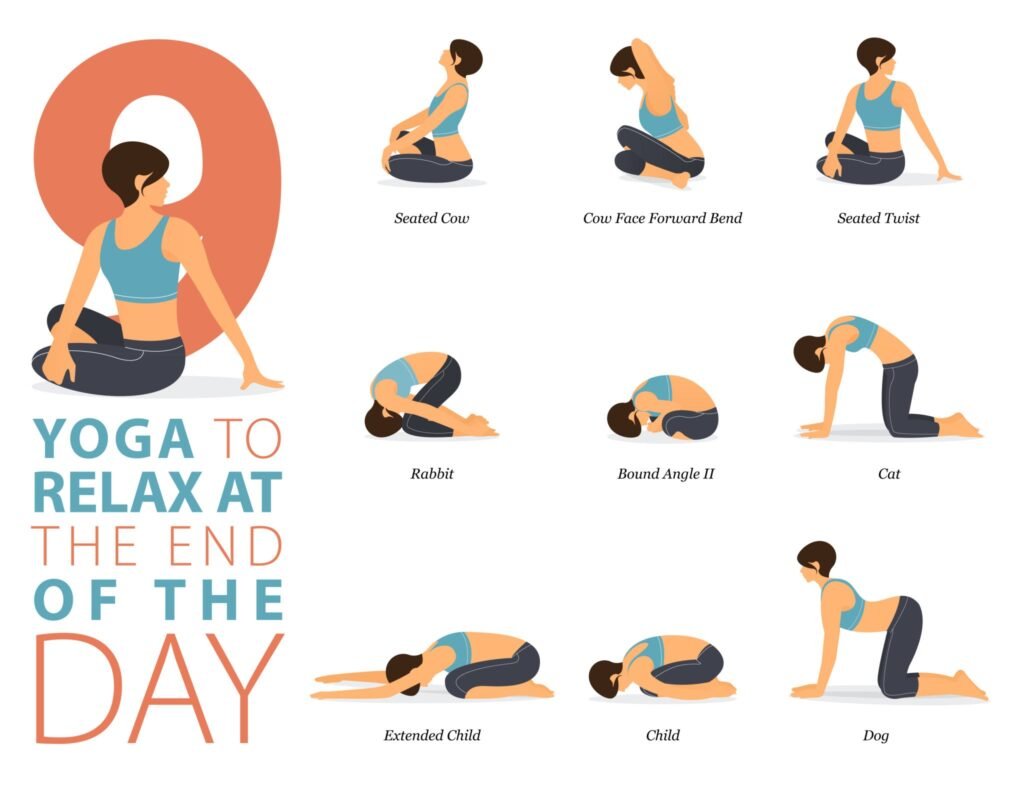
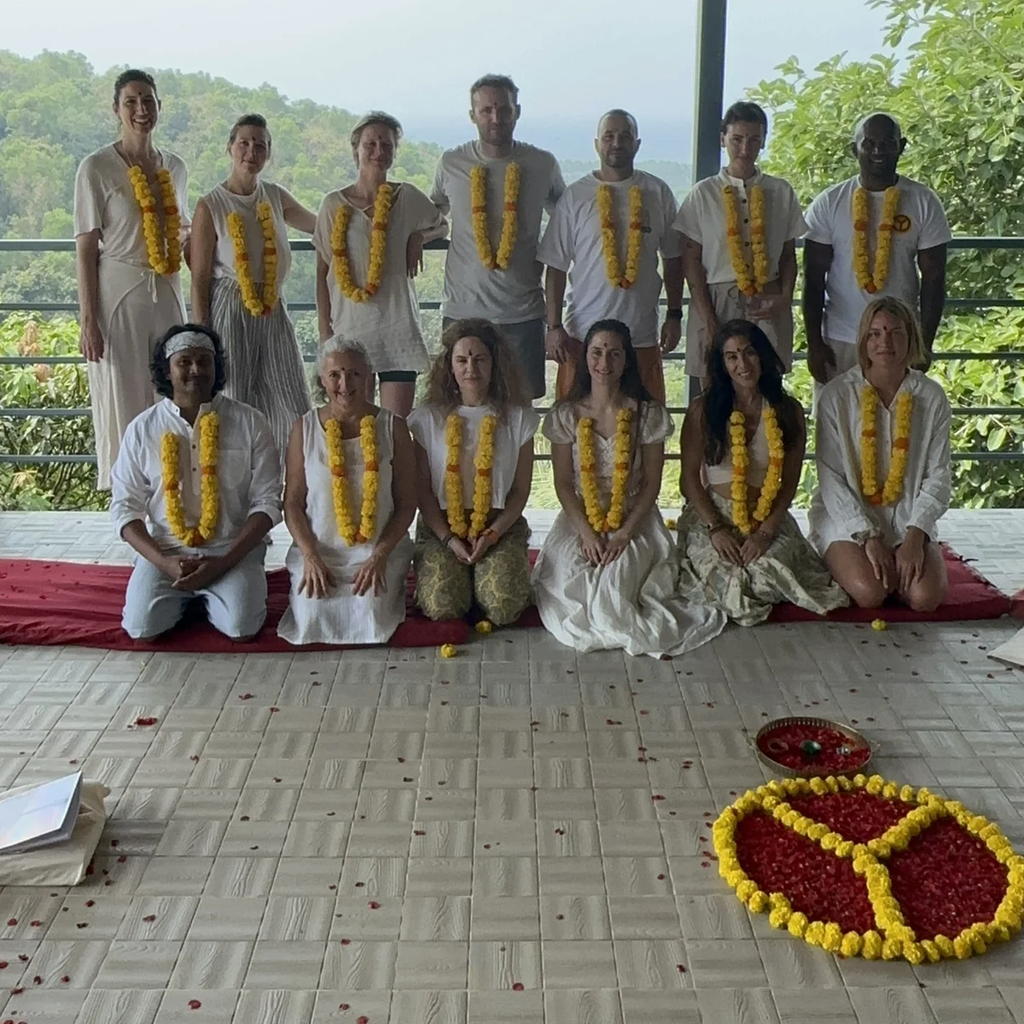
Not every school that says “trauma-informed” actually teaches it in depth. Before you enroll in a trauma-informed yoga teacher training in Goa, check for real dedicated hours on nervous system regulation, invitational language, and consent around touch, small batch sizes, and Yoga Alliance recognition. Use the checklist below so you can compare schools properly instead of going on marketing copy alone.
Goa has become one of the most popular places in India to train as a yoga teacher, but if trauma-informed teaching genuinely matters to you, not every school treats it the same way. Here’s exactly what to look for before you book.
Why This Actually Matters
Trauma-informed teaching is a real, specific skill set. It’s not a mood or a vibe you can bolt onto a standard training with one afternoon lecture. A school that treats it seriously builds it into the syllabus with real hours, real practice teaching, and a trainer who understands the nervous system, not just the asana.
That’s the difference between a certificate that mentions trauma-informed teaching once, and one that actually prepares you to hold space for the real, mixed group of students you’ll teach for the rest of your career.
The Checklist: What a Real Program Should Include
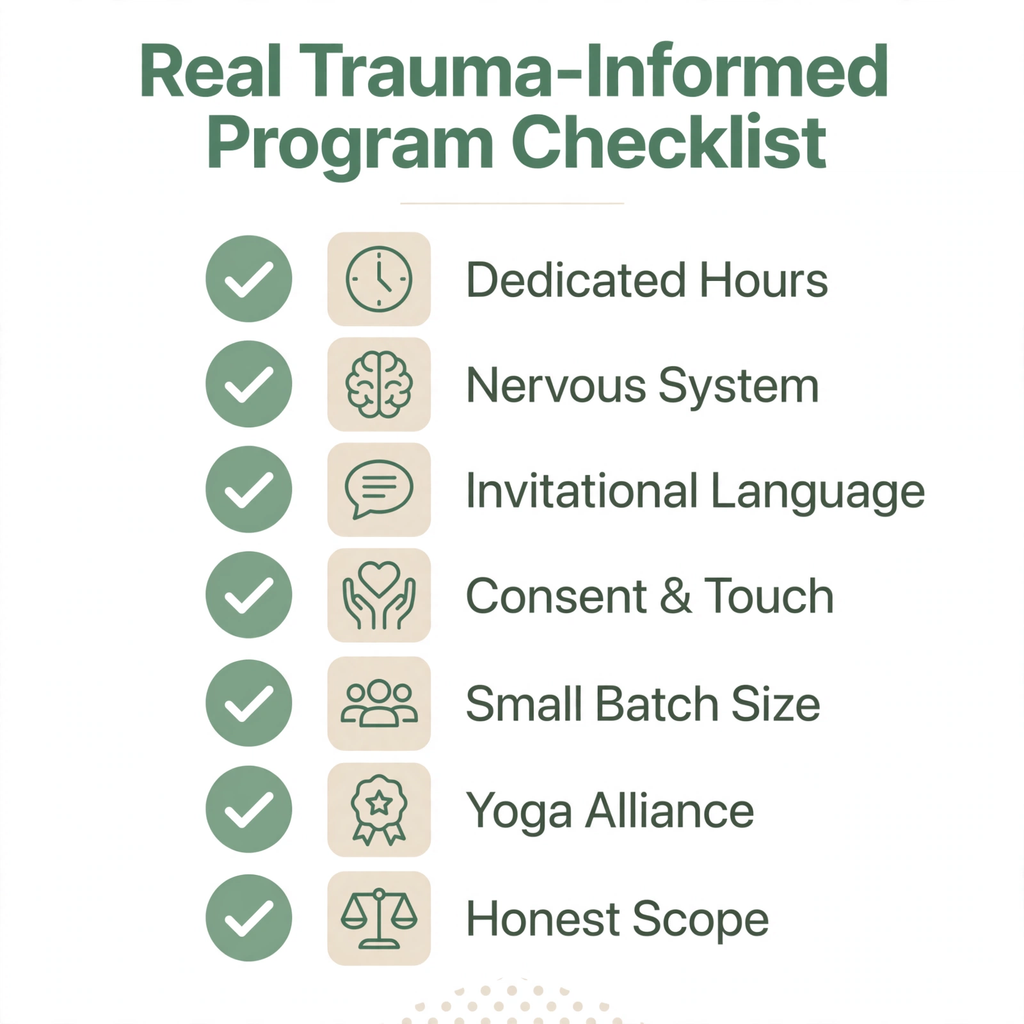
Run any school you’re considering through this list:
- Dedicated hours, not a mention. Ask exactly how many hours cover nervous system regulation and trauma-informed teaching specifically.
- Nervous system education. Look for real content on the autonomic nervous system, fight, flight, and freeze responses, and how they show up in a yoga room.
- Invitational language practice. You should actually practice rewriting cues, not just hear the theory once.
- Consent around touch. A clear, taught approach to if, when, and how hands-on adjustments happen.
- Small batch sizes. This kind of teaching skill is difficult to build in a room of 40. Ask directly.
- Yoga Alliance recognition. RYS 200 or RYS 300 registration so your certification is recognized internationally.
- Honest scope of practice. The school should be upfront that this is teacher training, not clinical trauma treatment.
Six Questions to Ask Before You Enroll
- How many hours are dedicated specifically to nervous system regulation and trauma-informed teaching?
- Is it a standalone module, or woven through sequencing, philosophy, and teaching methodology too?
- What’s the trainer’s background with trauma-informed or nervous system-based frameworks?
- How does the school generally handle touch and hands-on adjustment in class?
- What’s the average batch size for this training?
- Is the certification Yoga Alliance registered?
If a school can answer all six clearly, with specifics, that’s a strong sign. Vague answers are a sign to keep asking.
A Straight Answer on What This Training Is (and Isn’t)
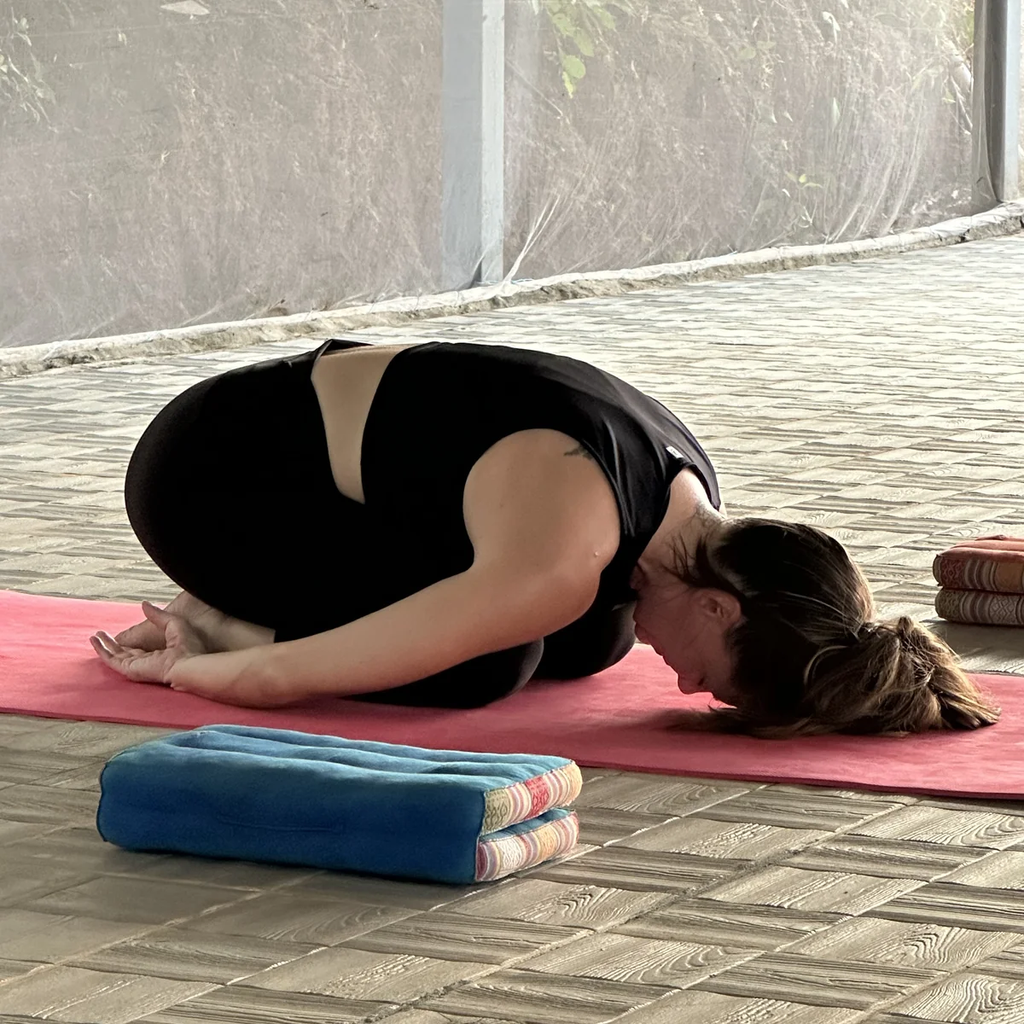
Worth being direct here: even an excellent trauma-informed yoga teacher training trains you to teach yoga safely and inclusively. It doesn’t make you a licensed trauma therapist, and it isn’t clinical treatment. Specialized clinical models exist separately for that, usually requiring mental health credentials.
What a strong program does give you is the confidence and skill to hold space for real students, many of whom carry some form of past stress or trauma the teacher may never be told about directly, with far more awareness and care than standard “command and correct” teaching allows.
Oceanic Yoga’s Nervous System Regulation & Trauma-Informed Training in Goa
If you’re comparing schools using the checklist above, this is exactly what our own program in Morjim, North Goa is built around. We keep the training focused, keep batches small on purpose, and go deep into nervous system regulation and trauma-informed teaching rather than treating it as a side note.
👉 See the full Nervous System Regulation & Trauma-Informed Yoga Teacher Training in Goa
👉 Ask us your checklist questions directly
Curious what “trauma-informed” actually means before you compare schools? Start with our guide on what trauma-informed yoga teacher training is. If you’re also weighing up your broader 200-hour or 300-hour path, our cost breakdown for training in Goa is worth a read too.
FAQs
1. How do I know if a “trauma-informed” yoga teacher training is actually good?
Check for real dedicated hours on the topic, not a passing mention. Ask about the trainer’s background, batch size, and whether the school is Yoga Alliance registered.
2. Is there a dedicated trauma-informed and nervous system regulation training in Goa?
Yes. Oceanic Yoga runs a dedicated Nervous System Regulation & Trauma-Informed Yoga Teacher Training in Morjim, Goa, built specifically around this focus rather than as a short add-on.
3. Does this training qualify me as a trauma therapist?
No. It trains you to teach yoga in a safer, more inclusive, choice-based way. It’s not a substitute for clinical trauma therapy or a mental health credential.
4. Is trauma-informed training only useful for teaching trauma survivors?
No. These skills improve how you teach every class, since most groups include students carrying some past stress or trauma the teacher may never know about.
5. How is this different from TCTSY (Trauma Center Trauma-Sensitive Yoga)?
TCTSY is a separate, specific clinical certification typically used in therapeutic settings. Trauma-informed and nervous system focused training teaches the underlying principles for general teaching, not the clinical model itself.
6. What should I ask before paying a deposit?
Ask the six questions in this guide directly, in writing, before you commit. A school confident in its program will answer clearly.