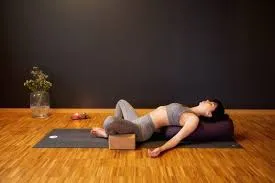
However, if you have had a hectic day, you don’t necessarily have to exercise intensely to unwind. You could incorporate some Yin Yoga practice into your routine to help you relax and be mindful of your body to create a calm transition into the evening. Unlike other styles of yoga, Yin Yoga usually consists of passive poses, in which the muscles are relaxed, and the poses are held for a few minutes.
The following is an easy sequence for yin yoga that takes about 15 minutes to do. It includes 10 poses, all selected from the Oceanic Yoga list of 26 basic Yin Yoga poses that provide you with a variety of positions without taking much time. According to Oceanic Yoga, a typical Yin pose is maintained for two to five minutes, but more experienced people can stay longer.
If you are interested in trying more poses, check out the full list of 26 Yin Yoga Poses on the Oceanic Yoga website, which will give you information about each pose and its variations.
What Makes This 15-Minute Yin Yoga Sequence Different?
This exercise is not about stretching yourself to the fullest extent possible. This exercise requires stillness, comfortable sensations, and conscious breathing. As compared to other kinds of yoga, Yin Yoga is much slower, and long holds allow you to observe the changes in your body.
In tonight’s practice, you will perform several poses sitting down, lying down, and resting. You should not attempt to do all of the poses perfectly. It is enough for you to choose a comfortable pose in which you will feel some sensation but no pain.
You may perform these exercises on a yoga mat, carpet, or any other soft surface. In addition, a cushion, a pillow, a blanket, or yoga blocks will help you.
Before You Begin with Yin Yoga Sequence
Allocate yourself a 15-minute quiet period in which there will not be any interruptions. If dim lighting helps you relax, turn it off and put your phone on silent and select an appropriate temperature.
Start by taking a comfortable position and breathing naturally. Relax your shoulders and jaw with every breath in.
Recall that Yin Yoga should not cause pain. According to Oceanic Yoga, use various props in your practice, and if you feel pain, numbness, or excessive stretching, come out of the posture.
1. Child’s Pose
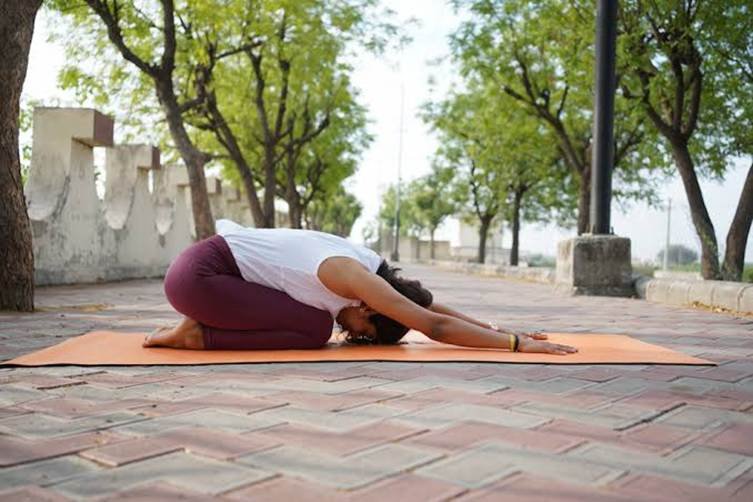
Begin your yin yoga flow with Child’s Pose, also called Balasana. From the kneeling pose, gradually move your hips closer to your heels and bow your upper body down. You can choose to keep your arms straight out in front of you or place them at your sides.
Hold this posture for approximately one minute. Make sure your forehead touches the floor or the cushion if that is hard for you.
This is a good starting point since it helps you to calm down and breathe deeply. According to Oceanic Yoga, this is a good stretch for many parts of the body, like the spine, hips, and ankles.
2. Butterfly
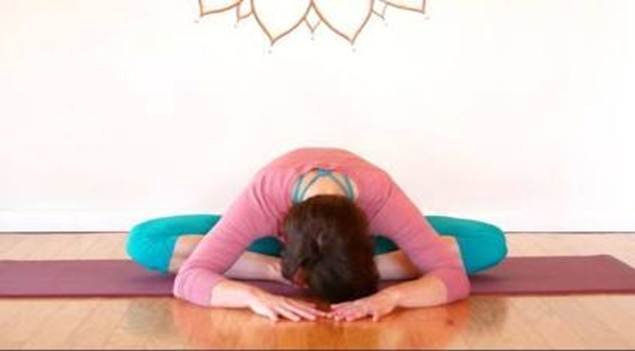
Afterward, proceed to Butterfly pose. Relax in a comfortable position, making sure that the soles of your feet touch each other. Allow your knees to drop freely and not force them downward.
Your upper body should slowly fold forward if it’s comfortable. A cushion can be placed under the hips, or you may use blocks or pillows to support your knees.
The duration of the pose is 90 seconds, and all your muscles should stay relaxed during this time while breathing evenly. One of the most popular Yin poses, Butterfly targets the inner thighs and the lower back.
3. Caterpillar
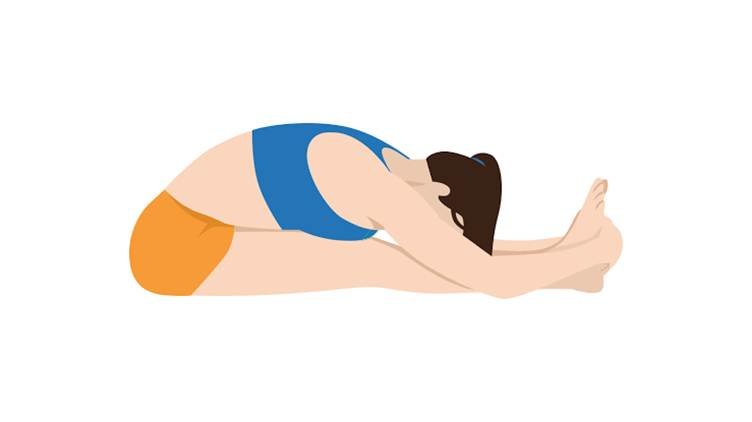
From Butterfly pose, straighten your legs in front of you and transition into Caterpillar, which is a Yin variation of a seated forward fold.
It’s okay to keep your knees a little bit bent if you need that. Your upper body should gently fold over your legs without active effort to pull yourself forward.
Stay in the pose for about 90 seconds, feeling a gentle sensation rather than a stretch. Caterpillar belongs to 26 core Oceanic Yoga poses and is considered to be a pose targeting the whole back of the body.
4. Half Butterfly
Following Caterpillar, extend one leg out and bring the other leg towards the inner thigh, forming Half Butterfly.
Bend slowly to the stretched leg and use a cushion or bolster if necessary to support your torso. Stay here for 45 seconds per side and then switch sides.
With Half Butterfly, you get a chance to engage both sides of your body independently. Keep movements slow and avoid forcing your torso towards your leg.
5. Dragon
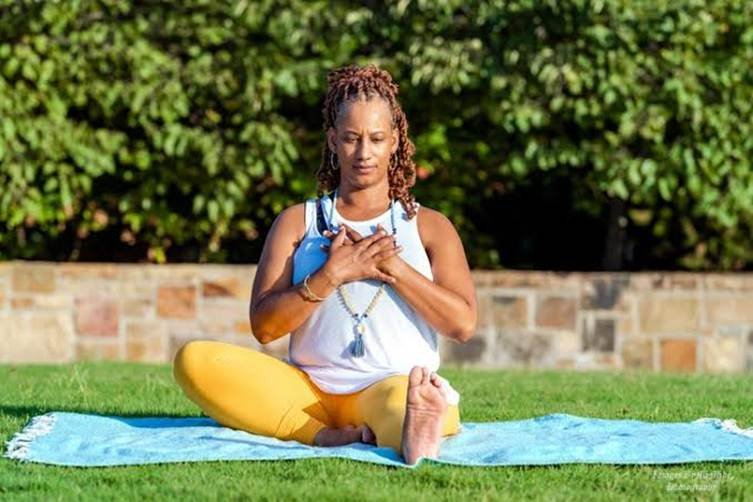
This time, move to the Dragon pose, which is a low lunge. Take a step forward with one leg and place the other leg back. Use blocks or the floor to help you support yourself.
Since Dragon can be more intense in relation to the hips and hip flexors, this section should remain gentle. Hold for 45 seconds on one side and then move to the other side.
According to Oceanic Yoga, Dragon is an intense hip flexor stretch with a few different variations. If you are a beginner when it comes to Yin Yoga, there is no need to take Dragon too deeply. It is fine to hold it for a shorter period of time.
6. Reclined Twist
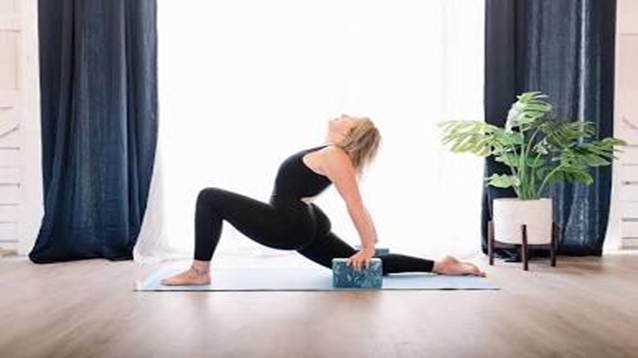
Lie down on your back and draw your knees to your chest. Lower both knees slowly on one side, keeping your shoulder relaxed.
Look to one side if it is comfortable. Hold the pose for around 45 seconds, then come to the centre and do it on the other side.
The Reclined Twist offers a gentler move from the energetic hip opening pose to the relaxing portion of your practice at night. Oceanic Yoga lists it as one of the basic Yin poses.
7. Reclined Butterfly Pose
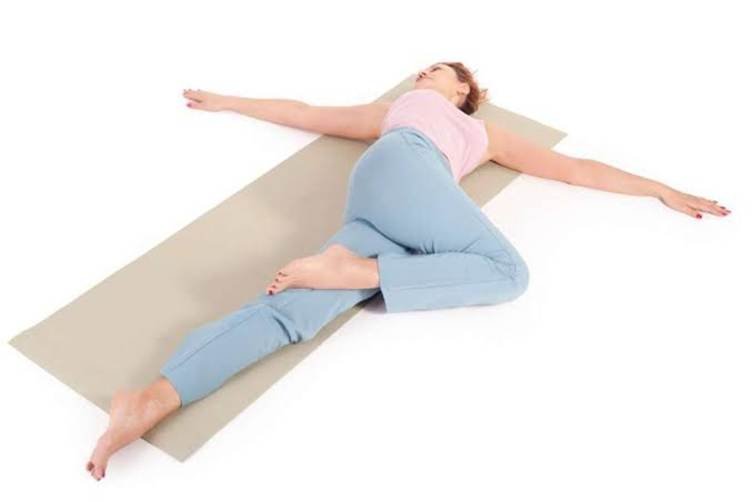
For this pose, lie on your back, bringing your feet together. Your knees will open out to the side naturally. In case of discomfort in your hips, place some cushions or blocks under your knees, which will make a big difference in a sustained pose.
Hold the pose for one minute, allowing your hands to be placed comfortably on your sides. Reclined Butterfly Pose is listed as a heart opener and restorative pose by Oceanic Yoga.
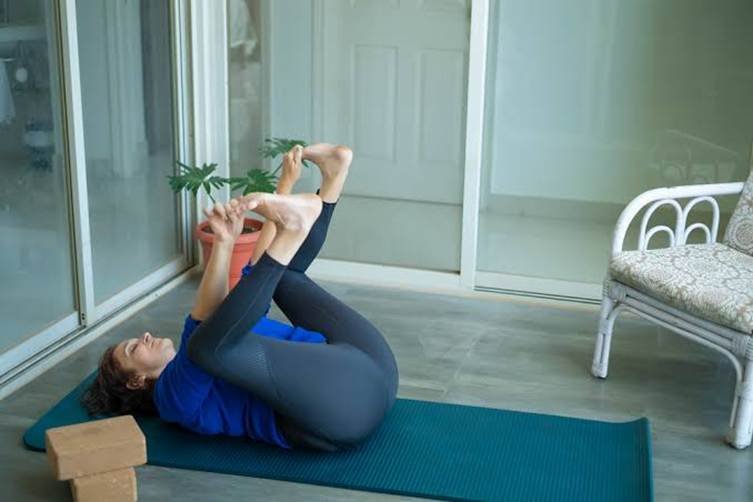
8. Happy Baby
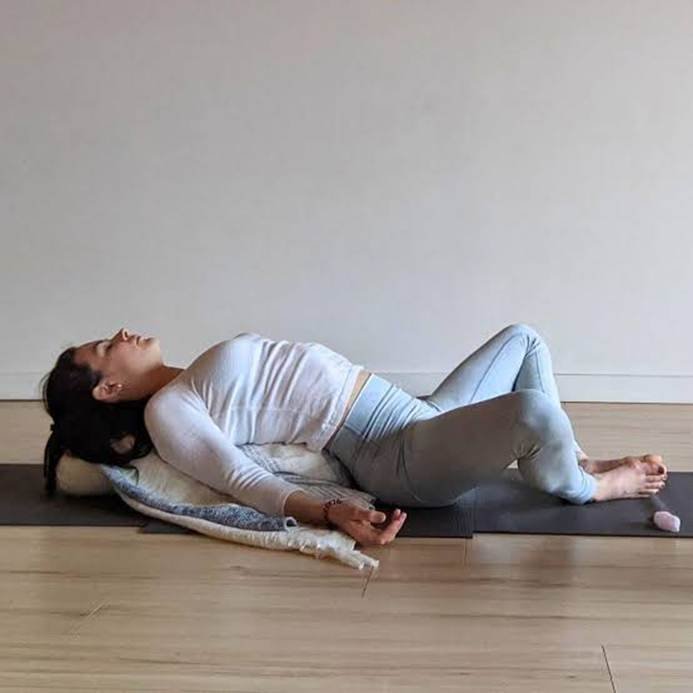
Following Reclined Butterfly, pull your knees to your chest and get into Happy Baby. Grasp the backs of your thighs or the outside edges of your feet based on what suits you better. You don’t have to pull your knees down aggressively. On the contrary, let your hips soften and breathe comfortably.
Hold for about one minute. Happy Baby is one of the yin yoga postures practiced by Oceanic Yoga and is characterized as a pose that gently stretches your hips and lower back area.
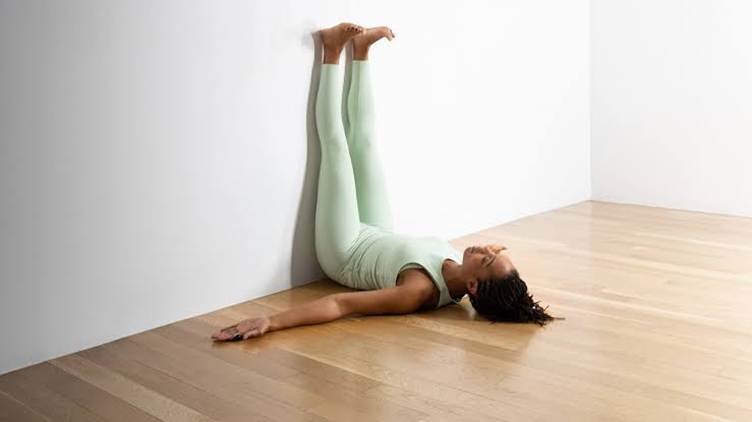
9. Legs Up the Wall
The next asana involves moving closer to a wall and lying back while placing your legs upward on it. Your hips do not have to reach the wall. Choose the distance that will enable you to relax your legs and lower back.
Hold for about one minute. Relax your arms by your sides and breathe slowly. Legs Up the Wall is one of 26 postures that are recommended by Oceanic Yoga and serves as a gentle restorative pose. This can be a particularly enjoyable asana towards the end of your evening practice since you need to invest no effort at all physically.
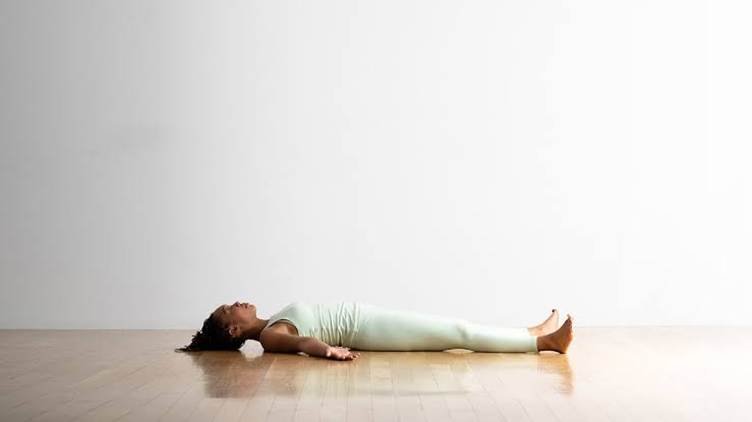
10. Savasana
Conclude the 15-minute session with the help of Savasana. Assume a comfortable lying position on your back, keeping your limbs relaxed.
Shut your eyes and let your breath get into a natural flow. The last minute will be devoted to being aware of your body. There is nothing to do – no need to stretch, adjust, or perform anything else. Just stay still. Savasana is the concluding asana of the Oceanic Yoga 26-postures program and is considered an important resting asana for relaxation.
How Long to Hold Yin Yoga Sequence
One of the most frequent inquiries made by beginners concerns the duration of yin yoga pose holding. No single length can apply to all people. According to Oceanic Yoga, most Yin Yoga poses should be held for about two to five minutes, with the possibility for the more experienced yogis to extend the duration of their pose holding.
Still, a 15-minute sequence for beginners will include shorter holds, as it needs to accommodate several poses in a short period of time. As you become used to the practice of Yin Yoga, you can gradually increase the length of each pose.
What is important to remember is not to push yourself to the limits. If there is any sharp pain, numbness, or excessive strain – exit the pose.
Can You Practise Yin Yoga Before Bed?
Of course, a slow evening Yin Yoga session is a great opportunity to prepare for sleep quietly without being distracted by other things. Unlike regular workout sessions, this kind of yoga involves more peaceful movements.
You can perform the following exercises after work or at any time when you have 15 minutes for yourself without interruption. If some poses are stimulating enough for you, reduce the time you stay in this position.
Take Your Yin Yoga Sequence Practice Further With Sound Healing
Once you feel confident in your Yin Yoga practice, you might like to look into the use of sound within stillness. Oceanic Yoga provides a Yin Yoga and Sound Healing Teacher Training program that includes both Yin Yoga and sound-based practices such as those using Tibetan singing bowls, gongs, bells, breathwork, mantra, and meditation.
More information on Yin Yoga and Sound Healing can be found via Oceanic Yoga’s specialized webpage. The program explains Yin Yoga to include long-held postures, stillness, gentleness, and awareness, along with sound healing.
For people who appreciate the quiet nature of Yin Yoga, there is another way to have an intentional relaxation experience by combining calming sound or meditation at the end of a practice.
A Simple 15-Minute Routine to Remember for a Yin Yoga Sequence
You don’t have to remember an advanced list of yin yoga poses just yet. All you need to remember for today’s practice is the following sequence: Child’s Pose, Butterfly, Caterpillar, Half Butterfly, Dragon, Reclined Twist, Reclined Butterfly, Happy Baby, Legs Up the Wall, and Savasana.
The duration of your practice may differ according to your experience level and the amount of time you have. This means you can hold difficult poses for shorter periods and more comfortable ones for longer. Above all else, make sure to keep your practice gentle.
Conclusion
A 15-minute Yin Yoga routine could turn out to be very easy. What you require is a comfortable place, a yoga mat, and patience. The routine outlined above combines 10 different postures from Oceanic Yoga’s 26-posture routine and creates an easy-to-follow practice during the evening that does not involve you going through the entire repertoire of poses.
Begin by holding the postures for a shorter period of time, using any props needed, and do not force your body to perform a posture. With regular practice, it will be possible to get acquainted with postures and try different ways of holding them.
If you are willing to develop your practice further, check out Oceanic Yoga’s complete [26 Yin Yoga Poses] guide for new postures, variations, and details of holding times.
And if you decide to discover more about the connection between stillness, vibrations, and yoga, then Oceanic Yoga offers an opportunity to learn about it in their [Yin Yoga and Sound Healing] program.