
Trauma-informed yoga teacher training teaches instructors how to build a physically and emotionally safe practice space. That means using invitational language, offering choice instead of instruction, and skipping hands-on adjustments or cues that could feel triggering. It’s a teaching approach and awareness, not a form of therapy, and any yoga teacher can learn it, not just those planning to work in clinical settings.
Seen the term “trauma-informed yoga” and wondered what it actually means in practice, or whether you need it as a teacher? Here’s the simple version.
Trauma-Informed Yoga, Explained Simply
At its core, trauma-informed yoga is about how a class is taught, not which poses land in the sequence. It recognizes that many students walk into a yoga room carrying past experiences of trauma, from accidents and grief to abuse, medical trauma, or chronic stress. Common teaching habits like physical adjustments without consent, commanding language, dim lighting, or being touched from behind can unintentionally make a student feel unsafe or overwhelmed.
A trauma-informed teacher isn’t trying to diagnose or treat trauma. They’re teaching in a way that lowers the risk of re-triggering it, while giving every student more choice and control over their own body during practice.
The Core Principles Every Trauma-Informed Teacher Learns

Most trauma-informed yoga training, no matter the school, comes back to a handful of shared principles:
- Choice over instruction: offering options (“you might try…”) instead of commands (“do this”)
- Invitational language: cueing in a way that never assumes compliance
- No unsolicited touch: hands-on adjustments only with clear, ongoing consent, or skipped altogether
- Present-moment awareness (interoception): helping students notice body sensations without judgment
- Predictability: a consistent class structure so students know roughly what’s coming next
- A real sense of safety: thoughtful lighting, room setup, exits, and pacing
These principles show up across body-based trauma work, and were popularized by clinical models like TCTSY (Trauma Center Trauma-Sensitive Yoga), developed by David Emerson and researchers at the Trauma Center in Massachusetts.
Trauma-Informed vs. Trauma-Sensitive vs. Clinical Trauma Therapy
This is where confusion creeps in, so let’s be precise:
| Term | What It Actually Means |
| Trauma-informed yoga | A general teaching approach: awareness, language, and classroom habits that reduce harm and boost student choice. Any yoga teacher can learn this. |
| Trauma-sensitive yoga (like TCTSY) | A specific, clinically validated, trademarked model that needs its own dedicated certification, often used alongside professional mental health treatment. |
| Trauma therapy | Clinical treatment delivered by a licensed mental health professional: a therapist, psychologist, or psychiatrist. |
A 200-hour or 300-hour yoga teacher training that includes trauma-informed teaching modules gives you the first category: a genuinely valuable, practical skill set for teaching real students. It’s not, and shouldn’t claim to be, the second or third.
If you or someone you know is working through trauma, yoga can support that journey, but it works best alongside, not instead of, care from a licensed therapist or counselor.
Who Actually Needs This Skill Set?
You don’t need to work in a hospital or shelter to benefit here. Truth is, almost every yoga class already includes students carrying some kind of past trauma, whether the teacher knows it or not. Trauma-informed teaching skills are especially useful for:
- New teachers who want to teach safely and inclusively from day one
- Studio teachers working general public classes, not just specialized groups
- Anyone interested in working with veterans, survivors, first responders, or schools and community settings
- Teachers ready to move from a “command and correct” style toward one that centers the student
What a Trauma-Informed Module Actually Covers
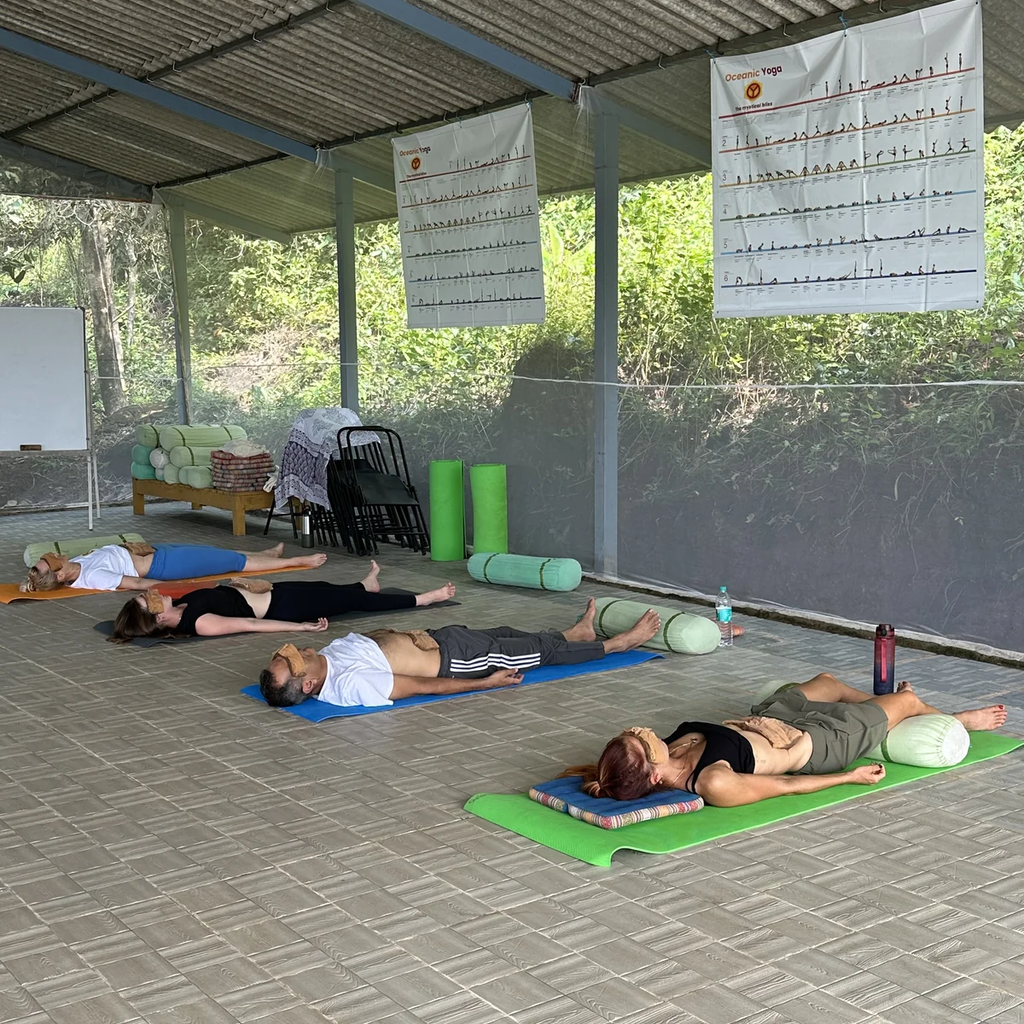
When trauma-informed training is built into a broader 200-hour or 300-hour program, it usually covers:
- Nervous system basics: a simple, practical look at fight, flight, and freeze responses, and how they show up on the mat
- Language practice: rewriting typical cues into invitational, choice-based language
- Consent and touch: how, and whether, to offer physical adjustments
- Class design: sequencing, room setup, and pacing choices that support safety
- Scope of practice: knowing clearly where teaching ends and clinical care begins
Where This Fits Inside a Standard Yoga Teacher Training
Trauma-informed teaching is increasingly taught as a dedicated module inside a broader 200-hour or 300-hour Yoga Alliance training, rather than as its own separate multi-week program. That makes practical sense. You’re learning trauma-aware teaching alongside anatomy, philosophy, and sequencing, so it becomes part of how you teach every class, not a bolt-on skill.
At Oceanic Yoga International in Morjim, Goa, we run a dedicated Nervous System Regulation & Trauma-Informed Yoga Teacher Training, alongside our standard 200-hour and 300-hour programs, so you can go as deep into this specific skill set as you want.
👉 Explore our Nervous System Regulation & Trauma-Informed Yoga Teacher Training in Goa
👉 See our standard 200-Hour Yoga Teacher Training
Comparing schools for this kind of training? Our companion guide on how to choose a trauma-informed yoga teacher training in Goa has a full checklist and questions to ask before you enroll.
FAQs
1. What does “trauma-informed” mean in yoga?
It means the teacher is trained to use language, class structure, and physical cues that lower the chance of unintentionally overwhelming or re-triggering a student who has experienced trauma, through choice-based instruction, consent around touch, and predictable class pacing.
2. Is trauma-informed yoga the same as trauma therapy?
No. Trauma-informed yoga is a teaching approach used by yoga instructors. Trauma therapy is clinical treatment provided by a licensed mental health professional. Trauma-informed yoga can support wellbeing, but it isn’t a replacement for therapy.
3. Do I need to be a therapist to teach trauma-informed yoga?
No. Trauma-informed teaching skills are taught to regular yoga teachers as part of good, inclusive teaching practice. Clinical models like TCTSY, used in therapeutic settings, involve separate, specialized certification.
4. Can any yoga teacher training include trauma-informed modules?
Yes. Many 200-hour and 300-hour Yoga Alliance trainings now include a trauma-informed teaching component covering language, consent, and nervous-system basics, taught alongside the standard curriculum.
5. Why does trauma-informed teaching matter even in a regular yoga class?
Because many students in any given class may be carrying past trauma the teacher isn’t aware of. Trauma-informed principles like choice and consent simply make classes safer and more comfortable for everyone, not just trauma survivors.
6. Where can I learn trauma-informed yoga teaching?
Look for a Yoga Alliance registered 200-hour or 300-hour training that includes a dedicated trauma-informed module, taught by instructors familiar with nervous-system basics and invitational teaching language.